Loading
Preparing your coverage insights...
Our Locations
Loading
Preparing your coverage insights...
Pennsylvania food trucks carry two exposures a fixed restaurant does not: a commercial vehicle and a kitchen built inside it. The state requires commercial auto on the vehicle and workers compensation from the first employee, but not general liability as a licensing condition, even though nearly every festival, brewery, or private event booking will require a certificate of insurance naming the organizer as additional insured. This guide covers Pennsylvania's Mobile Food Facility commissary rule and the seven-county carve-out, why the truck's build-out value has to be declared correctly on a commercial auto policy, the same-day certificate problem unique to event-based food service, and where equipment breakdown and inland marine coverage fit for the generator and refrigeration bolted inside.
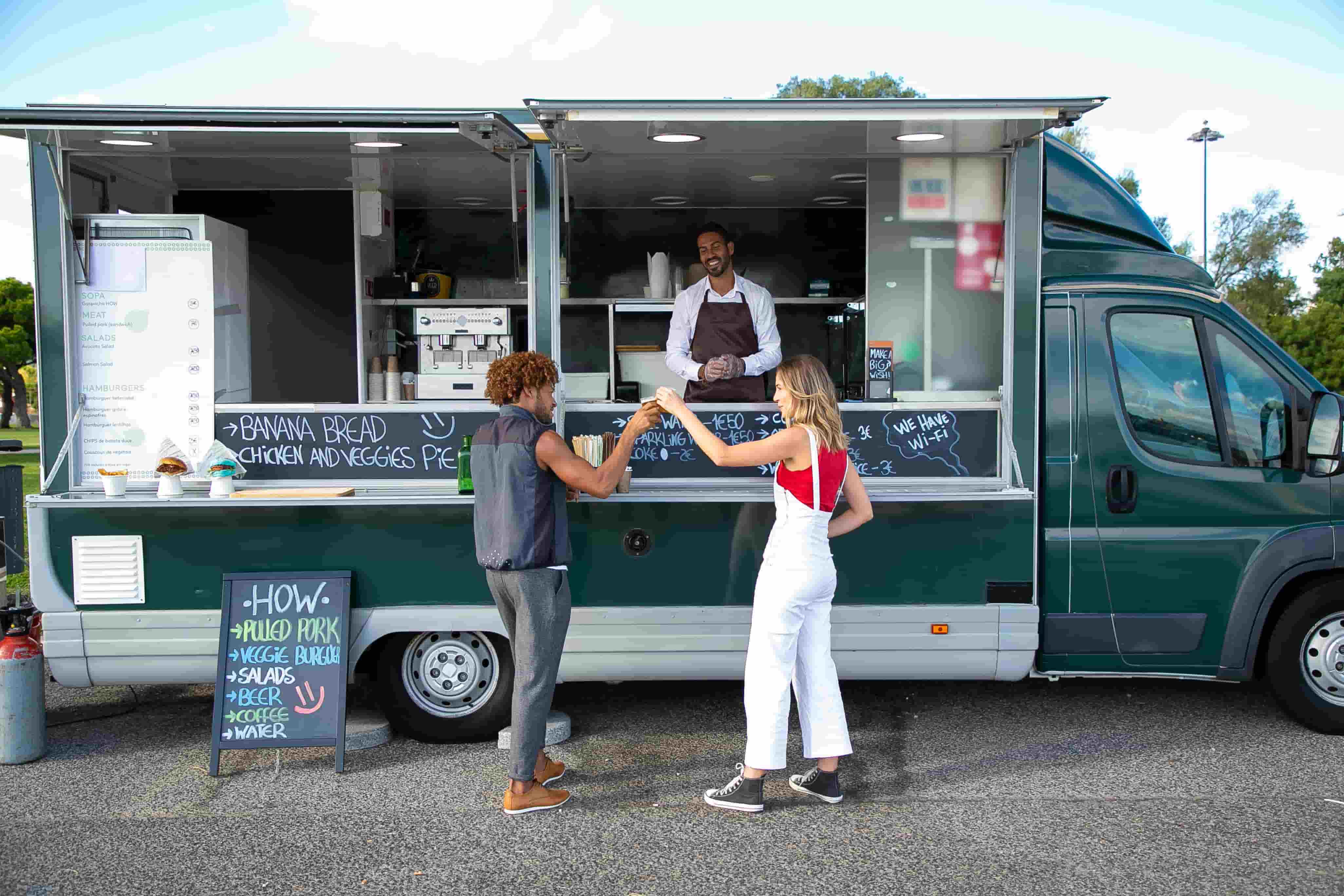
A propane fire at the flat-top, a fender-bender backing out of the commissary lot, a customer who says the curry made them sick after Saturday's festival. Same business, three completely different claims, and most food truck owners are carrying one policy built for none of them. A food truck is not a restaurant with wheels and it is not a work van with a griddle bolted in the back. It is two businesses riding on one chassis, a commercial vehicle and a food-service kitchen, both fully exposed the moment you turn the ignition or fire the burners.
Quick Answer
What insurance does a Pennsylvania food truck need? Pennsylvania requires commercial auto insurance on the vehicle itself, because it is titled and used for business, and workers compensation from your first employee. The state does not require general liability as a condition of your Mobile Food Facility license. In practice, nearly every festival, brewery, or private event that books you will require a certificate of insurance before you can pull in, so general liability stops being optional the moment you start taking bookings. Using Insureon's benchmarks below, a single-truck program bundling a Business Owners Policy with commercial auto commonly lands around $250 a month before workers compensation, which is priced separately once you have staff.
Pennsylvania licenses a food truck as a Mobile Food Facility, a separate category from a fixed restaurant but licensed through the same authority: the Pennsylvania Department of Agriculture across most of the state, or your county health department if your commissary sits in Allegheny, Bucks, Chester, Delaware, Erie, Montgomery, or Philadelphia County. That last point catches new operators off guard. Which agency licenses you is determined by where your commissary is based, not where you park to sell. A truck commissaried in Harrisburg and booked for a weekend festival in Philadelphia stays under Department of Agriculture jurisdiction for that license the entire time.
Get the coverage your commissary and your first event both require
Talk to a licensed agent today.
We quote commercial auto, general liability, and equipment coverage together, sized to what your commissary agreement and your first festival booking actually ask for.
Your food truck is titled to a business, modified from its stock configuration, and used exclusively to generate revenue. That combination puts it outside personal auto coverage entirely, the same exclusion that catches a contractor's pickup or a caterer's van. Our commercial auto insurance guide covers that exclusion in detail and how Pennsylvania's commercial minimums scale with vehicle weight. A step van or box truck built out as a kitchen commonly crosses into the same weight classes that guide covers, so read it for the general mechanics rather than having them repeated here.
What is specific to a food truck is the value sitting inside the box. A stock cargo van is worth a fraction of the same van once a griddle, two fryers, a three-basin sink, a hood suppression system, and a reach-in refrigerator are bolted to the floor, and a standard commercial auto valuation does not automatically capture that difference. If your policy is written against the vehicle's stock value and the truck is totaled, the claim check reflects a delivery van, not a kitchen. Confirm at binding, not after a loss, that your declared value actually includes the built-out equipment permanently attached to the vehicle.
General liability is not a Pennsylvania licensing requirement for a Mobile Food Facility any more than it is for a fixed restaurant. It is, practically speaking, the coverage that responds to the two claims a food-service business generates most: someone gets hurt at your point of service, or someone says your food made them sick.
A customer leaning on a fold-down service counter that was not fully secured, a burn from a cup handed across too fast, a line cook stumbling toward the window with a screaming-hot pan, all become bodily injury claims shaped by the same reality every food truck deals with: everyone is standing closer to hot equipment than they would be inside a dining room, because the whole operation is a few feet wide.
Foodborne illness claims are the second category, and they are harder to defend without records. A single complaint of an upset stomach rarely becomes a claim; a cluster traced to the same event does, particularly once a local health department opens a file. General liability covers the defense and any judgment, not the inspection itself, which is why the temperature and prep logs your commissary agreement already requires you to keep are also your best evidence if a claim like this reaches your insurer.
Some Pennsylvania food trucks partner with a brewery or work a beer garden where the venue pours and the truck only sells food, keeping liquor liability entirely off the truck's own policy. Confirm that division of labor in writing with the venue before assuming it, rather than discovering at a claim that both businesses expected the other to carry it.
A fixed restaurant issues a certificate of insurance once or twice a year, when a lease renews. A working food truck can be asked for a new one every week during festival season, each time naming a different organizer, brewery, or private host as additional insured, often on a deadline measured in days.
Markets, festivals, and private venues routinely require the certificate before they will confirm your spot, and the requirement usually means naming the event organizer or venue as additional insured on your general liability policy, not just proof that a policy exists. A certificate that only shows you are insured, without the additional insured endorsement the organizer actually asked for, gets rejected at load-in, sometimes the morning of the event.
This is where a food truck's insurance needs diverge hardest from a restaurant's. The coverage itself does not need to be exotic, general liability with reasonable limits does the job, but the turnaround has to be fast and repeatable. An agent who takes three business days to issue a certificate is a real operational problem for a business that books events on two weeks' notice or less.
Booked a festival with a certificate deadline?
We turn same-day certificates of insurance naming the event organizer or venue as additional insured, so a paperwork deadline never costs you a booking.
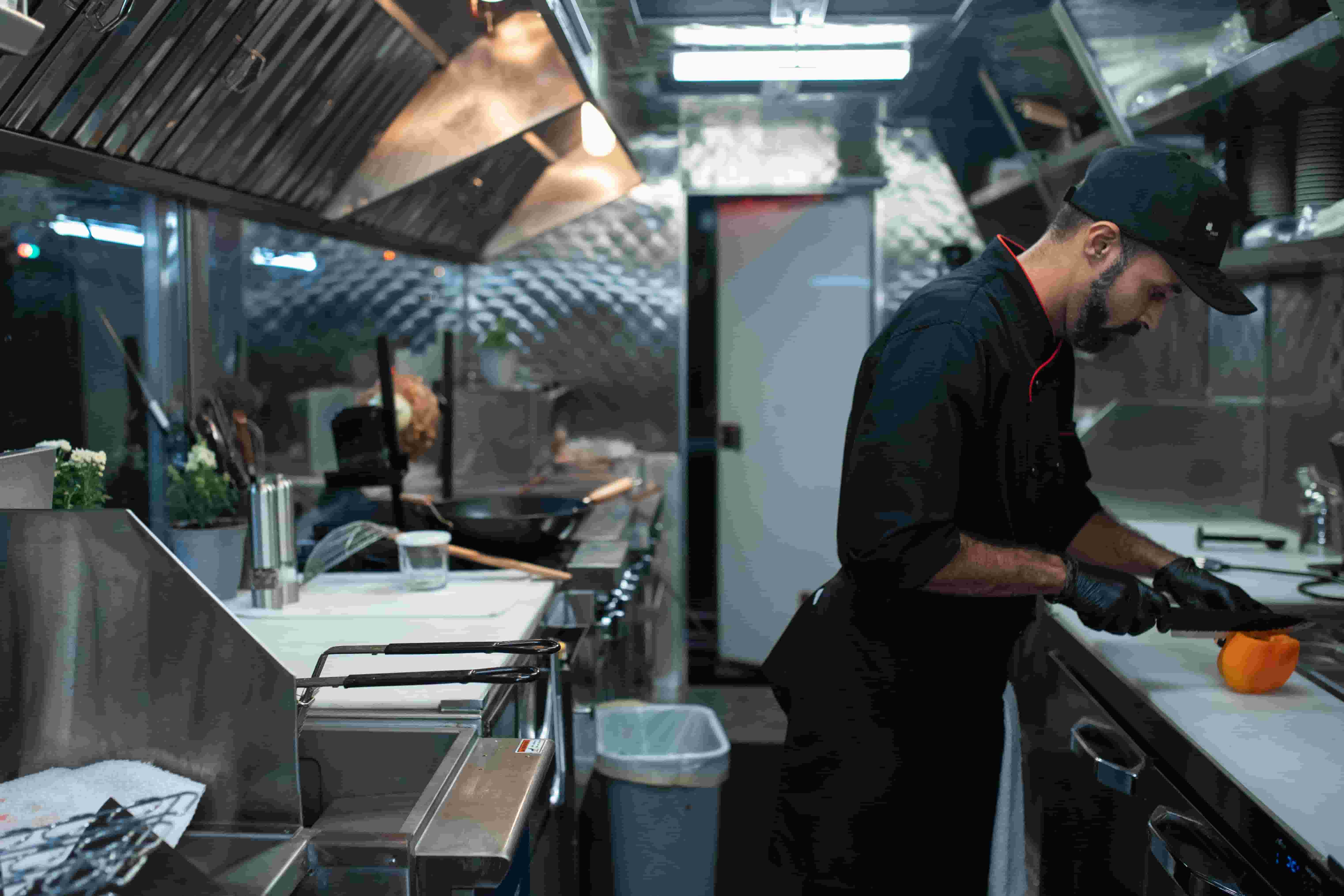
A food truck carries three different kinds of equipment exposure, and they are not covered by the same piece of paper.
Permanently mounted equipment, the flat-top, fryers, hood system, and a refrigeration unit bolted to the floor, is covered under your commercial auto policy's comprehensive and collision coverage, provided your declared value on the truck actually reflects the build-out, as covered above.
Portable equipment, a generator that rides in a rack rather than being hardwired in, folding tables, pop-up canopies, a point-of-sale tablet, and coolers, is a different exposure. This is where inland marine coverage, sometimes sold as a business personal property or equipment floater, is doing the work: it follows equipment that moves between your commissary, your truck, and an event site, rather than equipment that only exists in one fixed place.
Mechanical or electrical breakdown, a compressor failing on the reach-in refrigerator, a generator that will not start on a Saturday morning, a fryer tripping its own breaker, is neither a collision claim nor a theft claim. It is an equipment breakdown claim, the same coverage a coffee shop needs for an espresso machine failure, and it is worth pricing specifically rather than assuming a standard auto or property policy responds to a part simply wearing out.
Pennsylvania requires workers compensation from your first employee, full-time, part-time, or seasonal, the same rule that applies to a restaurant, a coffee shop, or any other employer in the state, according to the Pennsylvania Department of Labor and Industry. There is no exemption for a single part-time cook hired for weekend festivals only, and no proration based on how many hours a seasonal worker actually logs.
Food trucks run into this rule differently than a fixed kitchen because staffing is seasonal by nature. A truck that runs with just the owner during the week and adds two extra line cooks for summer festival season crosses the first-employee threshold the day that first festival hire is paid, even if the arrangement was only ever meant to last through Labor Day. Treating a summer hire as a 1099 contractor to sidestep the requirement is a common and costly misclassification, and it leaves an owner personally exposed for an injury that should have been covered.
Published figures are national averages, not Pennsylvania-specific, so treat them as benchmarks and confirm your real number with a quote. Insureon reports the median of what its actual food truck customers bought. A Business Owners Policy runs about $84 a month ($1,007 a year), typically bundling general liability with property coverage. Standalone general liability alone runs about $42 a month ($500 a year). Commercial auto for the vehicle itself averages about $170 a month, reflecting both the vehicle and the higher value of a built-out kitchen on wheels. Liquor liability, if you sell alcohol directly rather than partnering with a venue that holds its own license, adds roughly $58 a month.
"A festival wants a certificate by Friday and we load in Saturday."
We issue certificates naming the organizer or venue as additional insured the same day, once we have the event name and date, so a paperwork deadline never costs you the booking.
"Our truck got hit at a red light and the claim check did not cover the kitchen build-out."
We confirm your declared value includes the built-out equipment before you ever need the claim, and we revisit it every time you add or upgrade a piece of equipment.
"We hired two cooks for the summer festival circuit and I do not know if workers comp applies."
It applies the day you pay that first employee, seasonal or not. We get coverage in place before the first shift, not after an inspector asks for proof.
Subash Rai
“Great price. One of the best agency to explain me my coverage and finding me the policy that fit my need. Thank you Dragon Insurance and agent Manju for helping me out. You guys are best.”
Kapil khatiwoda
“Great price”
Get your food truck insurance quote
Commercial auto, general liability, equipment coverage, and workers compensation once you hire, quoted together, with same-day certificates for the next event on your calendar.
Visit us: 1525 Cedar Cliff Dr STE 202, Camp Hill, PA 17011
Does Pennsylvania require insurance for a food truck?
Yes, in a narrower way than most owners expect. Pennsylvania law requires commercial auto insurance on the vehicle itself and workers compensation from your first employee. The state does not require general liability as a condition of your Mobile Food Facility license. In practice, every event, festival, or venue you book will require it before you can set up.
Can I insure my food truck on a personal auto policy?
No. A personal auto policy excludes a vehicle that is titled to a business, used to sell goods for compensation, or permanently modified for commercial use, all three of which describe a food truck. A claim filed on a personal policy for a business vehicle is a claim insurers routinely deny. You need a commercial auto policy written for the vehicle and its build-out together.
What counts as a commissary, and does my food truck need one?
Yes, a commissary is required. A commissary is a fixed, licensed base of operations where you prep food, clean equipment, refill water, and dispose of waste between service. It cannot be a residential kitchen, and it has to be documented in your Mobile Food Facility license application, either your own licensed kitchen or a shared facility with a signed shared kitchen agreement.
Does it matter which Pennsylvania county my food truck operates in?
It matters which county your commissary sits in, not where you sell. Pennsylvania licenses Mobile Food Facilities through the Department of Agriculture, except in Allegheny, Bucks, Chester, Delaware, Erie, Montgomery, and Philadelphia counties, which run their own county health department licensing. A truck based outside those counties keeps its state license even while working an event inside one of them.
How much does food truck insurance cost in Pennsylvania?
Published data is national, not Pennsylvania-specific, so treat these as benchmarks. Insureon reports a median of about $84 a month for a Business Owners Policy, $42 a month for standalone general liability, and $170 a month for commercial auto on the truck itself. Adding the BOP and commercial auto benchmarks together puts a typical single-truck program around $250 a month before workers compensation, which is priced separately against payroll.
Do I need a certificate of insurance for every festival or event I work?
Usually yes, and often on short notice. Markets, festivals, breweries, and private venues commonly require a certificate naming the organizer or venue as additional insured before they will confirm your spot, not just proof that a policy exists. Confirm the exact limit and additional insured requirement before the event, since a certificate that does not match what was asked for can be rejected at load-in.
Is my cooking equipment covered if my truck is in an accident?
Only if your declared value reflects the built-out truck, not the stock vehicle. Permanently mounted equipment, the flat-top, fryers, and refrigeration bolted to the floor, is covered under the truck's comprehensive and collision coverage when the declared value accounts for it. Portable equipment that travels separately, like a rack-mounted generator or folding tables, is a different coverage, typically an inland marine or equipment floater policy.
Do I need workers compensation if I only hire staff for the summer festival season?
Yes. Pennsylvania requires workers compensation from your first employee, full-time, part-time, or seasonal, with no exemption based on how long the job lasts. The requirement starts the day you pay that first employee, which for many food trucks lands right at the start of festival season.
Does general liability cover a foodborne illness claim?
Generally, yes. General liability responds to bodily injury claims, including one traced to food you served, and covers your legal defense as well as any judgment or settlement. It does not cover the cost of a product recall itself, which requires separate recall expense coverage. Keeping the temperature and prep logs your commissary agreement already requires is also your strongest documentation if a claim like this reaches your insurer.
Dragon Insurance Services LLC is a licensed independent insurance agency. This article is general information, not legal, tax, or insurance advice specific to your business. Coverage availability, terms, and rates vary by carrier, business specifics, and applicant profile. Quotes are subject to underwriting approval. State and local licensing rules are subject to change; confirm current requirements with the relevant agency before you rely on them.
Explore Related Coverage
Ready to compare carriers and get a quote?
Dragon Insurance is an independent agency in Camp Hill, PA. We shop 30+ carriers to find your best rate.
Prefer to talk it through?
Get a real quote from a licensed advisor. English, Nepali, and Hindi spoken.
About the Author
Bimal GurungCEO, Agency Principal & Licensed Insurance Agent
Bimal Gurung is CEO and Agency Principal of Dragon Insurance Services, an independent agency in Camp Hill, PA that compares 30+ carriers for clients across Pennsylvania, Texas, Virginia, Maryland, Ohio, Tennessee, and Kentucky.
Meet the Dragon Insurance teamContinue Reading