Loading
Preparing your coverage insights...
Our Locations
Loading
Preparing your coverage insights...
Non-emergency medical transportation in Pennsylvania is regulated as paratransit by the PUC. The statutory minimum under 52 Pa. Code Section 32.11 is $35,000 combined liability for vehicles under 16 passengers, plus $25,000 first-party medical and $10,000 wage loss benefits. HealthChoices managed care organizations and transportation brokers generally require $1,000,000 commercial auto, $1,000,000 general and professional liability, abuse and molestation coverage, and workers compensation. This guide covers both standards, the Form E filing that controls your operating authority, 2026 per-vehicle costs by vehicle type, and how MATP contracting works.
Get a business insurance quote. One call compares the carriers we write side by side.
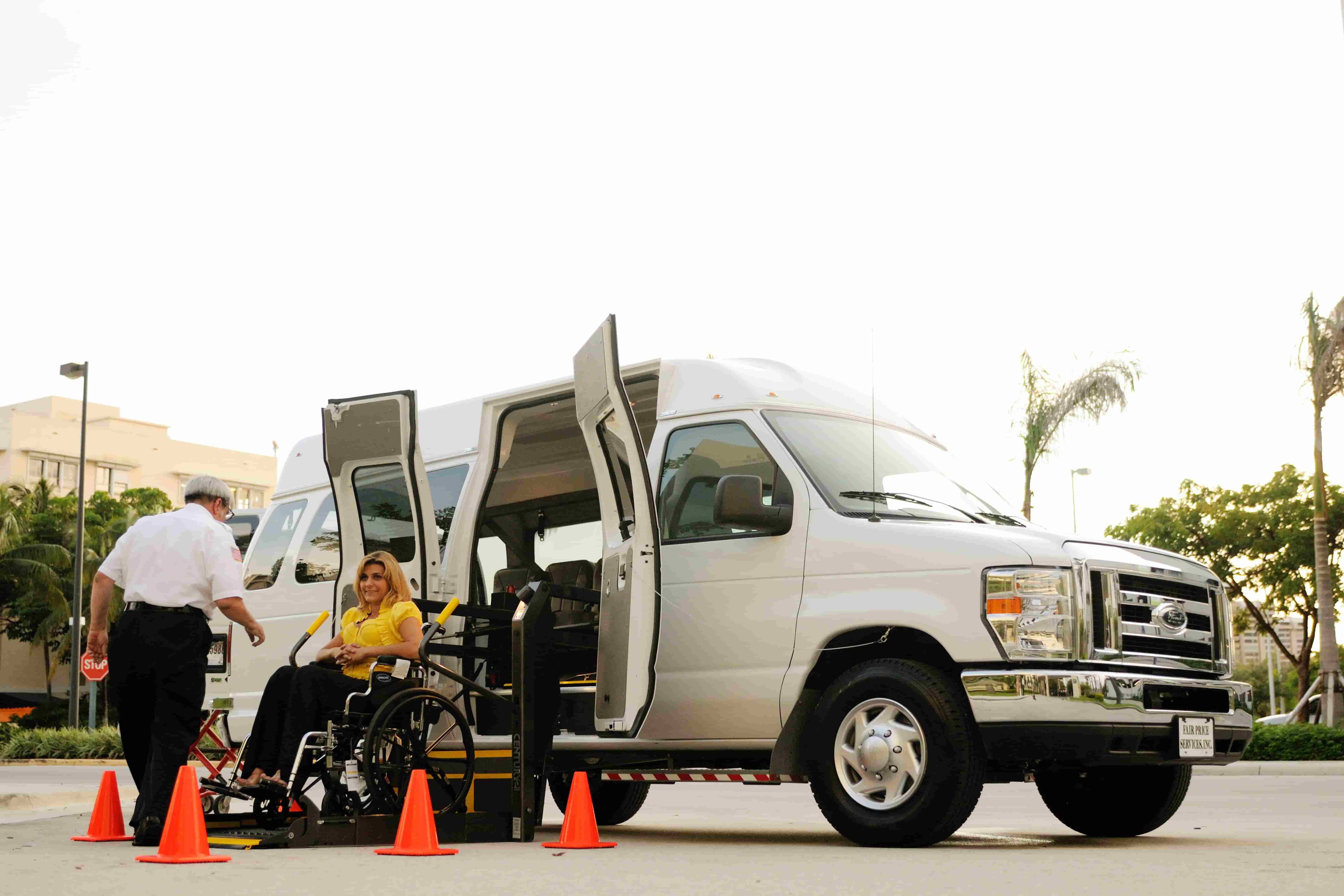
Pennsylvania law lets you put a wheelchair van on the road with $35,000 of liability coverage. Almost no one who actually pays for NEMT trips will let you carry that little. The Medicaid managed care plans and brokers that assign the work routinely require $1,000,000, which is roughly twenty-eight times the statutory floor. Operators who insure to the legal minimum are technically compliant and commercially unhireable at the same time, and most of them find out only after the credentialing packet comes back rejected.
This guide covers what Pennsylvania actually requires under 52 Pa. Code, what the contracts require on top of it, what NEMT coverage costs in 2026, and the filing that quietly controls whether your operating authority stays active.
Quick Answer
What insurance do you need for NEMT in Pennsylvania? Two separate standards apply and you have to satisfy both. The Pennsylvania Public Utility Commission sets the legal floor at $35,000 combined liability for vehicles carrying fewer than 16 passengers, plus $25,000 first-party medical benefits and $10,000 wage loss benefits. Separately, Pennsylvania HealthChoices managed care organizations and transportation brokers generally require $1,000,000 commercial auto, $1,000,000 general and professional liability, abuse and molestation coverage, and workers compensation before they will assign you trips. Insure to the contract standard, not the statutory one.
NEMT in Pennsylvania is regulated as paratransit service by the Public Utility Commission, not by PennDOT and not by the Department of Health. The insurance minimums live in 52 Pa. Code Section 32.11, and they are set by vehicle passenger capacity rather than by what you haul or who pays you.
| Vehicle capacity | Minimum liability | Additional required benefits |
|---|---|---|
| Fewer than 16 passengers | $35,000 total, split as $15,000 bodily injury per person, $30,000 per accident, $5,000 property damage | $25,000 first-party medical benefits, $10,000 first-party wage loss benefits |
| 16 to 28 passengers | $1,000,000 combined single limit | Not separately specified at this tier |
| More than 28 passengers | $5,000,000 combined single limit | Not separately specified at this tier |
Most NEMT operations run minivans, wheelchair-accessible vans, and stretcher vans, which all sit in that first row. That is why so many new operators are quoted a $35,000 policy, accept it as correct, and then discover the problem later.
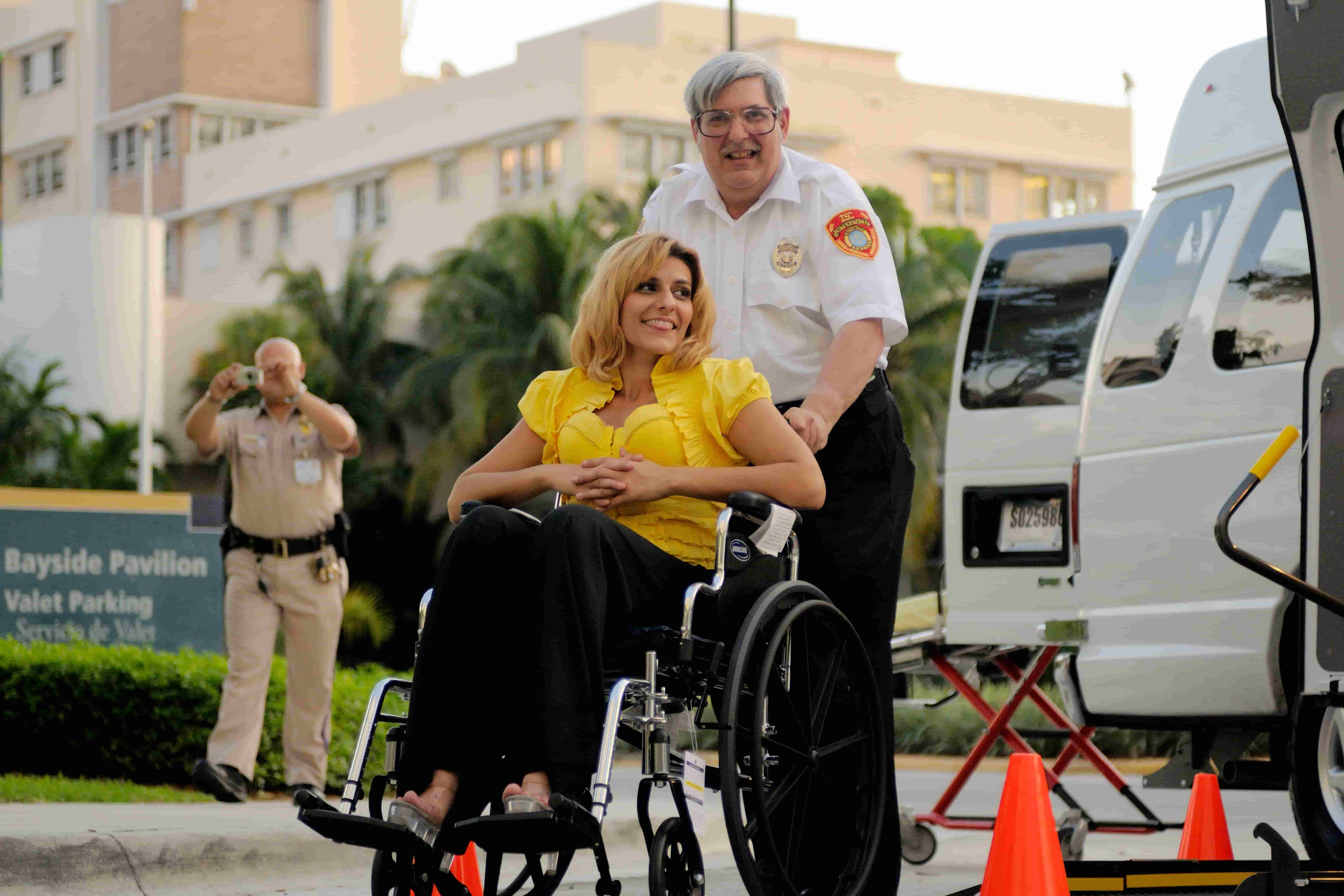
The Public Utility Commission decides whether you may legally operate. The people who pay you decide what you must carry to get work. Those are not the same number, and in Pennsylvania they are not close.
Pennsylvania HealthChoices managed care organizations, the plans that administer Medicaid benefits for most enrollees, generally require providers to carry $1,000,000 commercial auto on a combined single limit basis, $1,000,000 general and professional liability, abuse and molestation coverage, and workers compensation. Transportation brokers layer their own credentialing requirements on top, and those requirements live in the broker contract rather than in any state regulation, so you will not find them by reading the PA Code.
Two consequences follow. First, a policy written to the statutory minimum is a policy that cannot be credentialed, which means the cheapest quote you can legally buy is worth nothing commercially. Second, the requirements can change without a regulation changing, because a broker can revise its own contract terms. Operators who have not read their current broker agreement recently are frequently carrying limits that were adequate two renewals ago.
Not sure your limits will pass credentialing?
Send us the insurance requirements page from your broker or MCO contract. We quote coverage built to match it, so your packet clears the first time instead of coming back rejected.
Quick Answer
Does Dragon Insurance provide NEMT insurance in Pennsylvania? Yes. Dragon Insurance is a licensed independent broker that quotes and places non-emergency medical transportation coverage for Pennsylvania operators, comparing more than 30 carriers to match commercial auto, general and professional liability, abuse and molestation, and workers compensation to whatever limits a HealthChoices plan or transportation broker's contract requires. When a hospital system, county MATP office, or broker needs proof of coverage, Dragon issues the certificate of insurance the same day from its Camp Hill, Pennsylvania office, so a credentialing deadline does not cost you assigned trips. Dragon has operated from Camp Hill since 2018 and is licensed across Pennsylvania, Texas, Virginia, Maryland, Ohio, Tennessee, and Kentucky, so a fleet running in more than one state does not need a separate agency per state. Call 717-229-5115 or start a free quote to get your NEMT coverage and certificate of insurance in place.
Before you carry a paying passenger in Pennsylvania you need a Certificate of Public Convenience from the PUC. For most NEMT operations the correct application is Motor Common Carrier of Persons in Paratransit Service, which covers transportation arranged in advance on a non-exclusive basis. That description fits scheduled dialysis runs, standing appointments, and discharge transports, which is the bulk of NEMT work.
The filing that matters most afterward is Form E. It is the insurer's own certification, sent to the Commission directly by your carrier, proving you hold the required liability coverage. Three details catch operators out:
This is the operational reason NEMT operators care which agency they use. A Form E is not something you can file yourself, and a slow filing is indistinguishable from no filing as far as the Commission is concerned.
Published industry figures for 2026 put NEMT commercial auto roughly in these bands per vehicle per year, before general liability, workers compensation, or umbrella. Treat them as orientation, not as a quote, because vehicle type and driver records move them substantially.
Two things are pushing these numbers up. Industry reporting puts 2026 NEMT rates roughly 12 to 15 percent above 2024 levels, driven by medical cost inflation and litigation severity. At the same time several national carriers have withdrawn from NEMT and livery risk entirely, which thins the market and removes the competitive pressure that used to hold pricing down. Fewer markets writing a class is exactly when having an agency that can reach many of them stops being a convenience and starts being the difference between covered and parked.
NEMT is one of the few commercial classes where the auto policy alone leaves obvious, contractually relevant gaps. A credentialing packet is usually rejected for a missing coverage rather than a low auto limit.
This is the core policy, and it must be written for transporting passengers for compensation. A standard business auto policy rated for hauling equipment or staff is not the same product and will not respond the same way to a passenger injury claim. Anyone transporting medically fragile passengers for payment needs the for-hire livery basis specifically.
General liability answers for injuries that happen outside the vehicle, which in NEMT means the walkway, the doorway, the lift platform, and the moment of transfer. Professional liability responds to claims that the service itself was performed improperly, such as an improperly secured wheelchair or a passenger left unattended. Pennsylvania managed care contracts commonly ask for $1,000,000 here.
This is the coverage most operators have never heard of and the one credentialing most reliably checks. Your drivers are alone with vulnerable adults and minors, frequently assisting them physically. Standard general liability forms exclude abuse and molestation claims, so it has to be added deliberately. Contracts require it because the exposure is real and uninsurable after the fact.
Pennsylvania requires workers compensation from your first employee, with no small-business exemption, and NEMT driving is a physical class involving lifting, transfers, and securement. Drivers classified as contractors rather than employees are a frequent audit and claim dispute, so the classification needs to be right before an injury tests it.
Some hospital systems and broker contracts require limits above $1,000,000. Stacking an umbrella over the auto and general liability is almost always cheaper than raising both underlying limits, and it is usually the fastest way to satisfy a contract that asks for more than you currently carry.
Understanding who pays explains why the insurance requirements are what they are. Pennsylvania delivers Medicaid non-emergency transportation through the Medical Assistance Transportation Program, and the structure is unusual: MATP has historically been administered county by county across most of the state, while Philadelphia has operated on a broker model. Pennsylvania has been evaluating a move to a statewide broker arrangement under Act 46 of 2025, and that transition was not complete as of mid-2026.
For an operator, the practical consequence is that your requirements depend on who you contract with. A county MATP office, a managed care organization, and a national broker each maintain their own credentialing standards, and the broker standards commonly exceed the state floor by a wide margin. Enrolling as a Pennsylvania Medical Assistance provider and getting credentialed by a broker are two separate processes with two separate insurance reviews.
Almost every operator who calls us is dealing with one of these five. None of them are solved by shopping for a cheaper premium, which is why a general agent usually cannot fix them.
The problem
Credentialing rejected your policy
You bought coverage that meets Pennsylvania law, submitted it to a broker or managed care plan, and the packet came back rejected. The limits are legal but the contract wanted $1,000,000 and additional coverages your quote never mentioned.
What Dragon does
We start from your contract, not the statute. Send the insurance requirements page and we build the quote to those exact limits and endorsements, so the packet clears the first time instead of costing you a month of trips.
The problem
Your Form E is holding up your authority
The PUC will not activate or will suspend authority without binding proof on Form E, and you cannot file it yourself. An agent who batches filings or routes them through a queue can cost you your operating authority, not just time.
What Dragon does
We submit the Form E through the carrier and confirm back to you that the Commission accepted it. You get told it landed, rather than assuming it did and finding out at the worst moment.
The problem
Your market disappeared or your renewal jumped
National carriers have been exiting NEMT and livery risk, and the remaining ones are tightening appetite on vehicle age, seating capacity, and driver records. Operators are getting non-renewed or hit with double-digit increases through no fault of their own.
What Dragon does
We compare more than 30 carriers. In a shrinking class, the number of markets your agent can actually reach is most of what sets your price, and what one market declines another will often write at a workable number.
The problem
A broker wants a certificate today
A hospital system, county MATP office, or broker asks for a certificate of insurance naming them, and a slow turnaround means trips get reassigned to someone else while you wait.
What Dragon does
Certificates are issued the same day by a named advisor at our Camp Hill office. You are not filing a ticket and waiting for a call center to work through a queue.
The problem
You are missing coverages you have never heard of
Abuse and molestation is excluded from standard general liability, professional liability is a separate policy, and hired and non-owned auto is easy to overlook. Any one of them missing is a rejected credentialing packet.
What Dragon does
All three are quoted as part of the package from the start, alongside commercial auto and workers compensation, so you see the complete program rather than discovering the gaps during a review.
Dragon Insurance Services has operated from Camp Hill since 2018, protects more than 2,500 families and businesses, and holds more than 90 five-star reviews. Commercial transportation is our core book, not a side line, and we are licensed across PA, TX, VA, MD, OH, TN and KY, so adding a vehicle in a second state does not mean starting over with a new agency. If you also run wheelchair-accessible vehicles inside a broader fleet, our commercial auto guide covers how fleet rating and hired and non-owned coverage sit alongside a livery policy.
Whichever one of those five you are in, start here
A free quote costs you one conversation and tells you exactly where you stand against your contract. No obligation, and no pressure to move a policy that is already working.
Kapil khatiwoda
“Great price”
Prem Khawas
“Dragon Insurance Services is the best insurance agency in Harrisburg, PA! They helped me save money while making sure I had the right coverage for my needs. The team is professional, knowledgeable, and always takes the time to explain my options without any pressure. Their customer service is outstanding, and they genuinely care about finding the best policy for their clients. I highly recommend Dragon Insurance Services to anyone looking for affordable insurance and excellent service!”
Get covered
Find out today whether your limits pass credentialing
Call and speak to a licensed advisor in Camp Hill, or send the details and we will come back with commercial auto, general and professional liability, abuse and molestation, and workers compensation quoted together against the limits your contract actually requires. Most quotes are returned within the hour during business hours.
Have these ready and we can quote in one call
Visit us: 1525 Cedar Cliff Dr STE 202, Camp Hill, PA 17011. Serving NEMT operators across Harrisburg, Camp Hill, Lancaster, York, and statewide Pennsylvania.
What insurance is required for NEMT in Pennsylvania?
Two standards apply. The Pennsylvania PUC sets the legal minimum under 52 Pa. Code Section 32.11 at $35,000 combined liability for vehicles carrying fewer than 16 passengers, split as $15,000 bodily injury per person, $30,000 per accident and $5,000 property damage, plus $25,000 first-party medical benefits and $10,000 wage loss benefits. Separately, Pennsylvania HealthChoices managed care organizations and transportation brokers generally require $1,000,000 commercial auto, $1,000,000 general and professional liability, abuse and molestation coverage, and workers compensation. You need to satisfy both, and the contract standard is far higher.
Does Dragon Insurance quote and sell NEMT insurance in Pennsylvania?
Yes. Dragon Insurance is a licensed independent broker that quotes and places NEMT insurance for Pennsylvania operators, comparing more than 30 carriers to build commercial auto, general and professional liability, abuse and molestation, and workers compensation to the limits a HealthChoices plan or transportation broker's contract requires. When a hospital system, county MATP office, or broker needs proof of coverage, Dragon issues the certificate of insurance the same day from a named advisor at its Camp Hill office, rather than routing the request through a call center queue.
How much does NEMT insurance cost in Pennsylvania?
Published 2026 industry figures put commercial auto roughly at $5,500 to $9,000 a year for a sedan or standard minivan at $1M liability, $7,500 to $13,500 for a wheelchair-accessible van, $9,000 to $16,000 for a stretcher van, and $10,000 to $18,000 for a 15-passenger Sprinter-type vehicle. A full bundle including general liability, workers compensation and umbrella commonly runs $5,000 to $15,000 a year for a single-vehicle operator. Rates in 2026 are running roughly 12 to 15 percent above 2024 levels. These are orientation figures, not quotes.
Do I need PUC authority to run NEMT in Pennsylvania?
Yes. Transporting passengers for compensation in Pennsylvania requires a Certificate of Public Convenience from the Public Utility Commission. For most NEMT operations the correct application is Motor Common Carrier of Persons in Paratransit Service, which covers advance-reservation, non-exclusive transportation. That is the category scheduled dialysis runs, standing medical appointments, and discharge transports fall into.
What is a Form E and why does my certificate of insurance not count?
Form E is the insurer's own certification of coverage, filed with the Public Utility Commission directly by your insurance carrier. The Commission does not accept an agent-issued certificate of insurance as a substitute, because a COI is only evidence that a policy existed when it was printed. Form E has to be filed within the window the Commission allows after your authority is approved, and letting it lapse can suspend or cancel your operating authority entirely rather than simply generating a fine.
What is abuse and molestation coverage and do I really need it?
It covers claims alleging abuse or molestation of a passenger, and standard general liability forms exclude it, so it has to be added deliberately as separate coverage or an endorsement. NEMT drivers are alone with vulnerable adults and minors and frequently assist them physically, which is exactly the exposure the coverage exists for. Pennsylvania managed care and broker credentialing commonly require it, so in practice it is not optional if you want assigned trips.
Can I use my personal or standard commercial auto policy for NEMT?
No. A personal auto policy excludes carrying passengers for compensation outright. A standard commercial auto policy rated for business use is closer but still not correct, because NEMT requires a for-hire passenger basis covering paid transport of medically fragile passengers. Using the wrong form is one of the most common reasons an NEMT claim is denied, and it can also invalidate your PUC authority since the filed coverage would not match the operation.
Who pays for NEMT trips in Pennsylvania?
Medicaid non-emergency transportation runs through the Medical Assistance Transportation Program, which has historically been administered county by county across most of Pennsylvania, with Philadelphia operating on a broker model. Pennsylvania has been evaluating a statewide broker arrangement under Act 46 of 2025 and that transition was not complete as of mid-2026. Practically, your insurance requirements depend on whether you contract with a county MATP office, a managed care organization, or a national broker, and broker requirements commonly exceed the state minimums.
Why is NEMT insurance getting harder to buy?
Several national carriers have exited NEMT and livery risk, and the markets that remain have tightened appetite around vehicle age, seating capacity, and driver records. Combined with medical cost inflation and litigation severity, that has pushed 2026 rates roughly 12 to 15 percent above 2024. Fewer competing markets means the quote you get depends heavily on how many of them your agent can actually reach, which is why an independent agency comparing 30 plus carriers matters more in this class than in most.
Dragon Insurance Services LLC is a licensed independent insurance agency. Cost figures are third-party industry benchmarks for illustration, not quotes or guaranteed rates, and actual premiums vary by vehicle type, driver records, loss history, coverage selections, and underwriting approval. Pennsylvania PUC requirements reflect 52 Pa. Code Chapter 32 as of 2026 and MATP program structure reflects publicly available information as of mid-2026; both are subject to change. Managed care organization and broker credentialing requirements are set by those organizations, not by the Commonwealth, and vary by contract. This page is general information, not legal or regulatory advice. Verify current requirements with the Pennsylvania PUC and your contracting organization. Contact us for a personalized quote.
Explore Related Coverage
Ready to compare carriers and get a quote?
Dragon Insurance is an independent agency in Camp Hill, PA. We shop 30+ carriers to find your best rate.
Prefer to talk it through?
Get a real quote from a licensed advisor. English, Nepali, and Hindi spoken.
About the Author
Bimal GurungCEO, Agency Principal & Licensed Insurance Agent
Bimal Gurung is CEO and Agency Principal of Dragon Insurance Services, an independent agency in Camp Hill, PA that compares 30+ carriers for clients across Pennsylvania, Texas, Virginia, Maryland, Ohio, Tennessee, and Kentucky.
Meet the Dragon Insurance teamContinue Reading