
Loading
Preparing your coverage insights...
Our Locations
Loading
Preparing your coverage insights...
Complete compliance guide for commercial trucking insurance requirements: FMCSA minimum liability by cargo type, state-specific filing requirements for the states Dragon serves, BMC-91 and BMC-91X explained, cargo requirements, and how to get compliant before your first haul.
Get a business insurance quote. One call compares the carriers we write side by side.
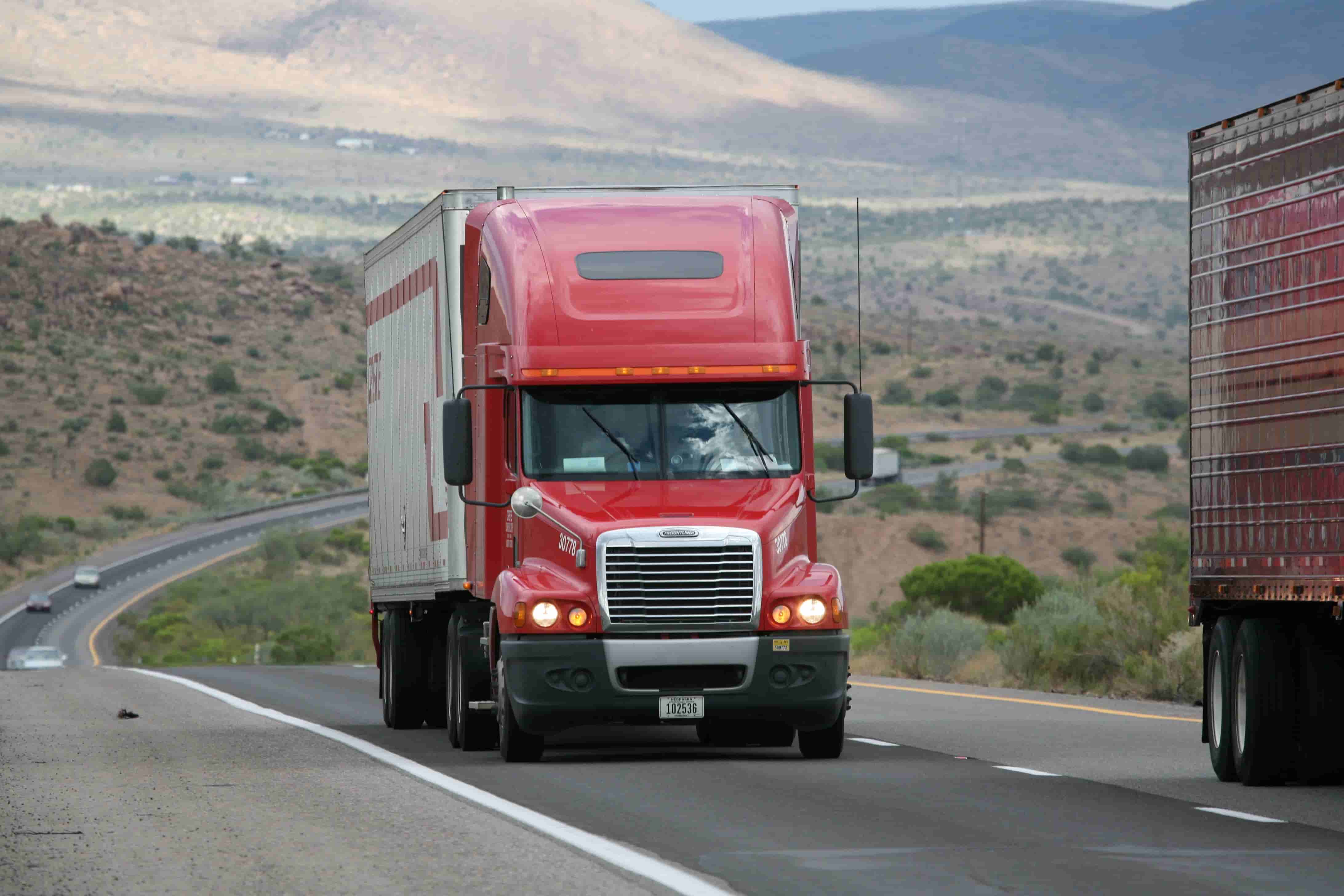
This is the multi-state compliance map, not a single-state deep dive. Commercial trucking insurance requirements come from three separate sources, and you need to satisfy all three to operate legally and get hired by freight brokers. The Federal Motor Carrier Safety Administration (FMCSA) sets federal minimums based on cargo type. Individual states can set higher minimums for intrastate operations. Freight brokers and shippers often require limits that exceed both the federal and state floors. Knowing all three, across every state you run in, is the only way to stay compliant and stay on a broker's approved carrier list. If you operate only within Pennsylvania, our Pennsylvania trucking insurance guide covers the PA PUC Form E/Form H filing path in full detail, that state-specific mechanic is not repeated here.
Dragon Insurance is appointed with Progressive, GEICO, and Trinity Underwriters for commercial trucking coverage, and also has access to additional specialty and excess and surplus (E&S) markets through master brokerage relationships for harder-to-place risk. We help operators in PA, TX, VA, MD, OH, TN, and KY meet FMCSA filing requirements, satisfy broker minimums, and get BMC-91/BMC-91X filings handled correctly so you can activate your authority without delays.
Key Takeaways
Quick Answer
What are commercial trucking insurance requirements?
Commercial trucking insurance requirements have three layers: (1) FMCSA federal minimums based on cargo type and vehicle weight, (2) state-specific requirements for intrastate operations that may mirror or exceed FMCSA levels, and (3) broker and shipper requirements that often exceed the legal minimum. All three must be satisfied to operate legally and get consistent freight. Most operators need at least $1M primary liability to access major brokers.
The following minimums are set by federal regulation (49 CFR Part 387) and apply to interstate carriers. These are the absolute legal floors. Most operators should carry more.
| Cargo Type / Operation | Minimum Primary Liability | Filing Form |
|---|---|---|
| General freight, interstate, over 10,001 lbs GVWR | $750,000 | BMC-91 or BMC-91X |
| Hazardous materials (as defined by PHMSA) | $5,000,000 | BMC-91 or BMC-91X |
| Oil or hazardous substances (non-bulk) | $1,000,000 | BMC-91 or BMC-91X |
| Non-hazardous freight, interstate, under 10,001 lbs GVWR (for-hire) | $300,000 | BMC-91 or BMC-91X |
| Household goods (moving companies) | $750,000 | BMC-91 or BMC-91X |
Source: 49 CFR Part 387. These are federal minimums for interstate operations. Intrastate operations may follow state-level rules. Always confirm with FMCSA and your state DOT before operating.
The FMCSA's $750,000 general freight floor is a legal threshold. It is not what the freight market actually accepts. The practical reality for most owner-operators trying to access load boards and broker networks is:
Standard brokers: $1,000,000 primary liability
The overwhelming majority of freight brokers (including major brokers like C.H. Robinson, Echo, and Coyote) require $1,000,000 primary liability as a carrier qualification standard. A $750,000 policy will fail carrier qualification with these brokers even though it meets the federal minimum.
High-value cargo shippers: $2,000,000 or more
Shippers moving high-value goods (electronics, pharmaceuticals, automotive parts) often require $2,000,000 or higher. Some dedicated contracts for specialized freight require $5,000,000 or even matching cargo insurance limits.
Cargo insurance: $100,000 standard broker requirement
Beyond primary liability, most brokers also require $100,000 cargo insurance as a minimum. Some shippers require higher limits matched to the shipment value. Cargo insurance is separate from primary liability and must be in place before accepting loads.
Tow operators face the same pattern with motor clubs, which set on-hook limits above any legal floor. Our tow truck insurance guide covers those limits so your quote matches the contract before you sign it.
For interstate carriers, FMCSA requirements govern. For intrastate carriers (operating entirely within one state), each state sets its own minimums. Most states mirror FMCSA levels or set slightly different thresholds. Many local straight truck operations run entirely inside one state, and our box truck insurance cost guide shows how that shorter radius shapes the price we quote.
| State | Intrastate General Freight Min | Notes |
|---|---|---|
| Pennsylvania | $750,000 (mirrors FMCSA) | PA PUC regulates intrastate for-hire carriers via a separate Form E/Form H filing, not BMC-91, see our Pennsylvania trucking guide for the full filing walkthrough |
| Texas | $500,000 (TxDMV for-hire intrastate) | TxDMV regulates intrastate motor carriers; FMCSA levels for interstate |
| Virginia | $750,000 (mirrors FMCSA) | VDOT and DMV regulate intrastate carriers; FMCSA levels for interstate |
| Maryland | $750,000 (mirrors FMCSA) | MDOT regulates intrastate for-hire carriers |
| Ohio | $750,000 (mirrors FMCSA) | Ohio PUC regulates intrastate carriers; FMCSA levels apply |
| Tennessee | $750,000 (mirrors FMCSA) | TN Department of Transportation; FMCSA levels for interstate |
| Kentucky | $750,000 (mirrors FMCSA) | KY Transportation Cabinet; FMCSA levels for interstate |
Intrastate requirements can change. Always confirm current minimums with your state DOT or a licensed commercial trucking agent before operating intrastate only.
The BMC-91 (or BMC-91X for layered/multiple insurers) is the form your insurance carrier files electronically with FMCSA to prove your policy meets the required minimum for your operating authority. Your insurer files it at policy inception, not you, and it will not activate a new MC number, or stay in force through a renewal, without a bound policy behind it. If the policy cancels for any reason, FMCSA gets 35 days notice and your authority is suspended until a new filing is on record. For the full step-by-step, including how Pennsylvania's intrastate PUC filing differs from the federal BMC-91 path, see our Pennsylvania trucking insurance guide.
Get your BMC-91 filing handled correctly
Dragon is appointed with Progressive, GEICO, and Trinity Underwriters for trucking coverage.
For harder-to-place risk, we also have access to specialty and E&S markets through master brokerage relationships. We handle FMCSA compliance filings as part of the binding process. One call gets your authority compliant and your policy active.
FMCSA requirements apply the same way to all carriers, but the practical experience of compliance is very different for a carrier just getting their authority compared to one renewing coverage after years of operation. Operators who need a truck covered for a single haul or a short seasonal run face the same filing rules, and our short-term trucking insurance guide explains how we quote that need on a full policy term billed monthly.
| Situation | Insurance timing requirement | Key risk |
|---|---|---|
| New DOT/MC authority applicant | BMC-91 must be filed before FMCSA activates authority; typically takes 20-25 days after application | Hauling before authority is active (illegal); delays in filing from slow insurer response |
| Established carrier at renewal | New policy must bind and new BMC-91 filed before old policy expires; no gap tolerated | Payment lapse mid-term causing unexpected cancellation and BMC withdrawal; authority suspension |
FMCSA has issued a Notice of Proposed Rulemaking (NPRM) that would raise the general freight minimum liability limit, which has been set at $750,000 since 1985, to a significantly higher amount. Proposals in the NPRM discussion range from $1,500,000 to $2,000,000 or more, with inflation-adjustment language that could push it even higher over time.
The NPRM is still in the comment and review phase as of mid-2026. Earliest possible implementation, assuming the rule is finalized, is late 2026 or more likely 2027. However, operators who already carry $1,000,000 (the broker standard) will have far less adjustment to make than those at the $750,000 minimum. If your coverage is at the FMCSA floor, now is the time to discuss a limit increase with Dragon.
New Owner-Operators: Navigating New Authority and FMCSA Compliance
Getting a DOT number, applying for MC authority, understanding the BOC-3 and UCR filings, and choosing the right coverage limits is a lot to sort out when you are setting up your first authority. First-time owner-operators often come to Dragon with questions that go beyond just the insurance policy itself, and most want straight answers fast, not a long onboarding process.
Dragon Insurance explains the full compliance chain in plain language, gets your BMC-91 filed correctly and on time as part of binding, and helps you understand what coverage limits you actually need to get approved by major brokers. We work with new authority carriers as well as established operations, and we move fast because we know a truck sitting idle costs you money.
What is the FMCSA minimum liability for general freight?
$750,000 for interstate carriers hauling general (non-hazardous) freight in vehicles over 10,001 lbs GVWR. This minimum has been in place since 1985 and a proposed rulemaking may raise it to $1.5M to $2M+ in 2026 or 2027.
Do all commercial trucks need $750,000 minimum?
No. The $750,000 minimum applies to for-hire interstate carriers hauling general freight in vehicles over 10,001 lbs GVWR. Smaller vehicles (under 10,001 lbs) for non-hazardous freight have a $300,000 minimum. Hazmat carries a $1M or $5M minimum depending on the substance. Intrastate carriers follow state rules.
What is a BMC-91 filing?
The BMC-91 is the form your insurance carrier files electronically with FMCSA to certify that your policy meets the required minimum liability limits for your operating authority. Without an active BMC-91 on file, FMCSA will not activate your MC authority and you cannot legally haul interstate freight for hire.
What happens if my commercial trucking coverage lapses?
Your insurer is required to notify FMCSA within 35 days of cancellation. FMCSA will then suspend your operating authority. You cannot legally haul for hire until a new policy is bound and a new BMC-91 is filed. The suspension is immediate and getting reinstated requires a new filing, which can take several business days.
Do freight brokers require more than the FMCSA minimum?
Yes. The vast majority of freight brokers require $1,000,000 primary liability as a carrier qualification standard, even though the FMCSA minimum for general freight is $750,000. Carriers at the $750,000 floor will fail carrier qualification with most major brokers and will have limited access to loads.
What is the difference between interstate and intrastate trucking requirements?
Interstate carriers (crossing state lines) must meet FMCSA federal minimums and file BMC-91. Intrastate carriers (operating entirely within one state) are regulated by state authorities. Most Dragon states mirror FMCSA levels for intrastate operations, but some (like Texas) have their own thresholds. Contact Dragon to confirm the exact requirement for your state and operation type.
How do I get my BMC-91 filed?
You do not file it yourself. When you bind a commercial trucking policy through Dragon, whether it is placed with Progressive, GEICO, Trinity Underwriters, or one of our E&S markets, that carrier files the BMC-91 electronically with FMCSA as part of the policy inception process. Confirm with Dragon that the filing has been submitted before hauling your first load.
What is the proposed new FMCSA minimum?
FMCSA has issued an NPRM to raise the general freight minimum from $750,000, where it has been since 1985. Proposals range from $1.5M to $2M or higher. The rulemaking is still in the review phase as of mid-2026. Earliest implementation is late 2026 or 2027. Operators who already carry $1M (the broker standard) will have the smallest adjustment to make.
FMCSA minimums, state requirements, and broker standards all need to be satisfied before you can operate legally and get consistent freight. Dragon Insurance handles all three: we place your risk with Progressive, GEICO, or Trinity Underwriters (or a specialty E&S market for harder-to-place risk), coordinate the BMC-91 filing at policy inception, and make sure your limits meet broker standards so you can access the loads you need. Visit our commercial trucking insurance page for the full coverage breakdown by fleet type and to start a quote.
Visit us: 1525 Cedar Cliff Dr STE 202, Camp Hill, PA 17011
Serving PA, TX, VA, MD, OH, TN, and KY. English, Nepali, and Hindi spoken.
Top Trucking Insurance Companies of 2026
FMCSA requirements, cost, and red flags to watch for owner-operators.
Read more
What Is Non-Trucking Liability Insurance?
Understand the coverage gap NTL fills and when owner-operators need it.
Read more
Commercial Trucking Insurance in Pennsylvania
PA-specific requirements and how Dragon helps operators get covered and compliant.
Read more
Dragon Insurance Services LLC is a licensed independent insurance agency. Federal minimum requirements are based on 49 CFR Part 387 as of 2026 and are subject to change pending the FMCSA NPRM rulemaking. State intrastate requirements are general estimates; verify current requirements with your state DOT. Broker requirements are industry norms and vary by broker. Contact us for a personalized compliance review and quote.
Explore Related Coverage
Ready to compare carriers and get a quote?
Dragon Insurance is an independent agency in Camp Hill, PA. We shop 30+ carriers to find your best rate.
Prefer to talk it through?
Get a real quote from a licensed advisor. English, Nepali, and Hindi spoken.
About the Author
Bimal GurungCEO, Agency Principal & Licensed Insurance Agent
Bimal Gurung is CEO and Agency Principal of Dragon Insurance Services, an independent agency in Camp Hill, PA that compares 30+ carriers for clients across Pennsylvania, Texas, Virginia, Maryland, Ohio, Tennessee, and Kentucky.
Meet the Dragon Insurance teamContinue Reading
Business
Texas Commercial Trucking Insurance | Dragon
13 min read
Business
Commercial Trucking Insurance in Pennsylvania | Dragon
18 min read
Business
Top Trucking Insurance Companies for Owner-Operators
15 min read
Business
Hot Shot Trucking Insurance: Pickup & Gooseneck Coverage
11 min read
Business
Tow Truck Insurance: On-Hook vs Garagekeepers
10 min read
Business
Box Truck Insurance Cost 2026: Pricing Guide
10 min read
Business
Short-Term Trucking Insurance: What's Real in 2026
10 min read