
Loading
Preparing your coverage insights...
Our Locations
Loading
Preparing your coverage insights...
Everything Pennsylvania truckers need to know: FMCSA liability minimums, PA PUC intrastate authority, bobtail vs. non-trucking liability, CSA scores, and 2025 cost ranges for owner-operators and small fleets.
Get a business insurance quote. One call compares the carriers we write side by side.
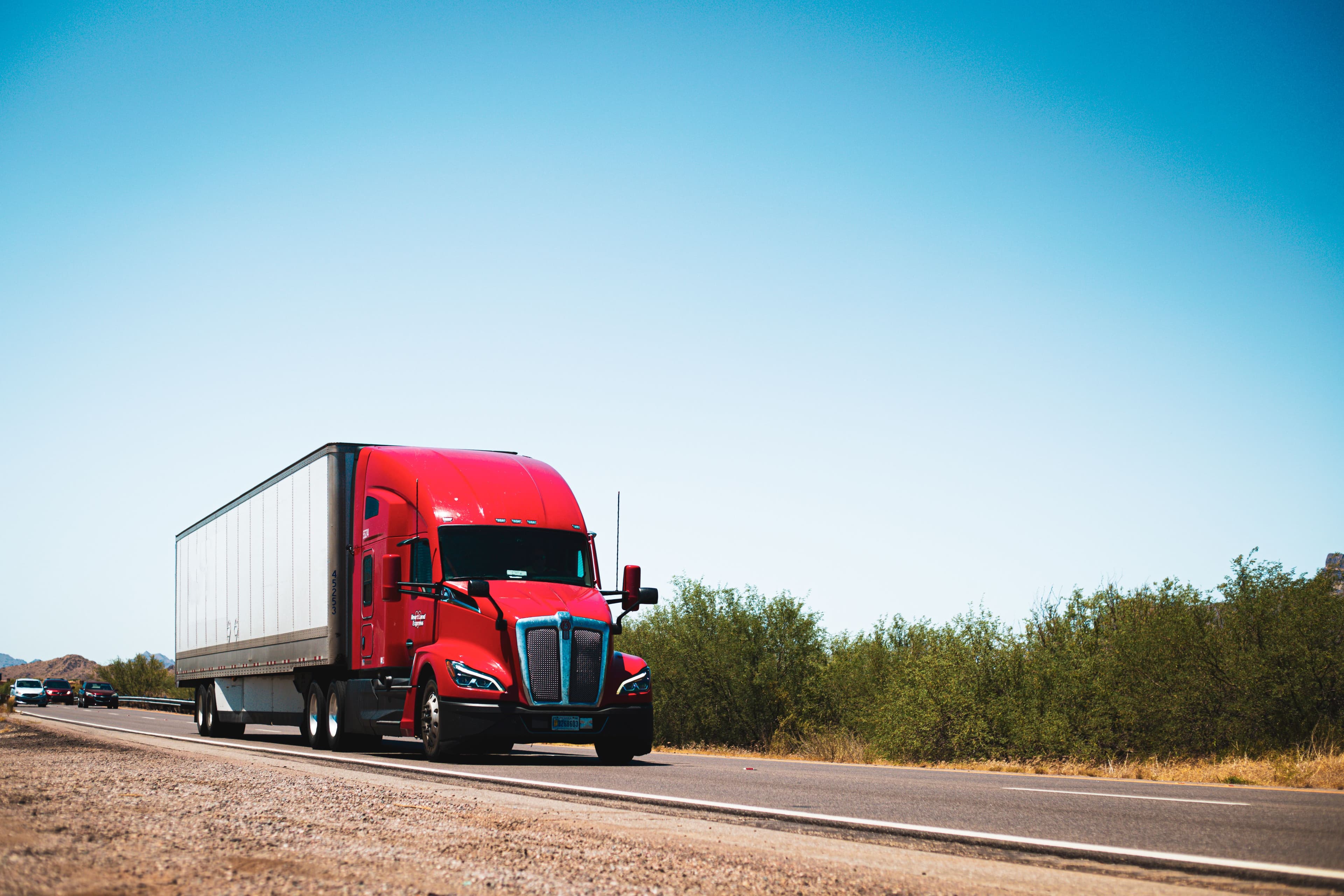
Pennsylvania truck insurance has to satisfy two regulators: FMCSA for freight that crosses state lines, and the Pennsylvania Public Utility Commission (PA PUC) for for-hire freight that stays inside the state. Interstate for-hire carriers of general freight in trucks of 10,001 pounds or more need at least $750,000 in primary liability under 49 CFR § 387.9, and the PA PUC sets the same $750,000 per accident floor for intrastate property carriers over 10,000 pounds under 52 Pa. Code § 32.12. Each regulator has its own filings, and missing one shuts you down just as completely as missing the other.
This guide covers what PA trucking insurance has to include, which filings FMCSA and the PUC expect, and what moves your premium, so you can bind the right program the first time. Dragon Insurance is based in Camp Hill and quotes Pennsylvania trucking programs with Progressive, GEICO, and Trinity Underwriters, plus additional specialty and excess and surplus (E&S) markets through master brokerage relationships.
Key takeaways
Commercial trucking insurance is a specialized class of liability and property coverage designed for vehicles transporting freight for compensation as a for-hire carrier. It is distinct from standard commercial auto insurance because it addresses the specific exposures of trucking: multi-state operations, third-party cargo liability, trailer interchange, bobtail and non-trucking use, and compliance with FMCSA financial responsibility filings under 49 CFR Part 387. A standard commercial auto policy typically excludes or severely limits for-hire freight operations, which is why carriers of all sizes need a dedicated trucking insurance program.
Dragon Insurance Services helps owner-operators and small fleets across Pennsylvania, Texas, Virginia, Maryland, Ohio, Tennessee, and Kentucky build the right trucking insurance program for their operation. Explore our commercial trucking insurance coverage or read on for the complete guide.
The most common mistake new owner-operators make is assuming their commercial auto policy covers their for-hire freight operation. It does not. Here is exactly where those policies diverge:
| Feature | Commercial Auto | Commercial Trucking |
|---|---|---|
| Vehicle types | Cars, vans, light pickups, SUVs | Semi-trucks, tractor-trailers, box trucks 26,001+ lbs |
| For-hire hauling coverage | Usually excluded | Primary liability covers this |
| FMCSA BMC-91 filing required | No | Yes, mandatory for interstate carriers |
| Cargo coverage available | No | Yes, motor truck cargo policy |
| Bobtail / NTL available | No | Yes, critical for leased operators |
| Typical primary liability limits | $100,000 to $500,000 CSL | $750,000 to $5,000,000 (FMCSA minimum to market) |
If you operate vehicles that are not for-hire freight carriers alongside your trucking operation, see our guide on commercial auto insurance for how those two programs interact.
Interstate motor carriers operating in Pennsylvania must comply with federal requirements under 49 CFR § 387.9. These are federal floor minimums, not the market standards that brokers and shippers will actually require from you.
| Operation / Cargo Type | FMCSA Minimum | Broker and Shipper Typical |
|---|---|---|
| General freight, non-hazmat (vehicles 10,001 lbs or more) | $750,000 CSL | $1,000,000 CSL |
| Vehicles under 10,001 lbs, non-hazmat for-hire | $300,000 CSL | $1,000,000 CSL |
| Oil (non-hazardous, certain quantities) | $1,000,000 CSL | $1,000,000 CSL |
| Hazardous materials (explosives, radioactive) | $5,000,000 CSL | $5,000,000 CSL |
| Passenger vehicles (15 or fewer passengers, including the driver, for hire) | $1,500,000 CSL | $1,500,000 CSL |
| Passenger vehicles (16 or more passengers for hire) | $5,000,000 CSL | $5,000,000 CSL |
Source: FMCSA 49 CFR § 387.9. CSL = Combined Single Limit.
The BMC-91 (single insurer) and BMC-91X (multiple insurers / layered coverage) are electronic proof-of-insurance filings that your insurance carrier submits directly to FMCSA. They are linked to your DOT number and serve as the government's real-time confirmation that your policy is active.
USDOT Number
Required for any commercial vehicle over 10,001 lbs operating in interstate commerce, or any size vehicle transporting hazardous materials in interstate commerce. In Pennsylvania, PennDOT applies the federal safety rules to intrastate trucks of 17,001 lbs or more (67 Pa. Code § 231.8), and the Pennsylvania State Police direct those intrastate carriers to obtain and display a USDOT number. Your DOT number is your safety identification: it links to your inspection history, CSA scores, and FMCSA safety rating.
MC Number (Operating Authority)
Required for for-hire carriers transporting regulated commodities in interstate commerce. An MC number activates only after FMCSA receives proof of insurance (your BMC-91 or BMC-91X) and proof of process agent designation (BOC-3). Private carriers moving their own goods do not need an MC number, but for-hire carriers do. If you haul freight for others across state lines, you need both DOT and MC numbers.
FMCSA governs interstate commerce, freight that crosses state lines. But if you operate exclusively within Pennsylvania, the Pennsylvania Public Utility Commission (PA PUC) takes over as the primary regulator for for-hire intrastate carriers. Most trucking guides stop at FMCSA and never mention PA PUC, which is exactly why intrastate operators get caught off-guard.
What PA PUC regulates
PA PUC regulates for-hire intrastate carriers, companies transporting goods or passengers for compensation entirely within Pennsylvania. Common and contract carriers of property (trucking companies) and household goods carriers are subject to the PUC insurance requirements in 52 Pa. Code § 32.12; passenger carriers fall under a separate section. Carriers transporting regulated commodities must file for a Certificate of Public Convenience (CPC) before operating.
PA PUC minimum insurance requirements
Under 52 Pa. Code § 32.12, PA PUC requires:
The cargo requirement does not apply to dump trucks or vehicles limited to hauling coal, earth, crushed stone, and similar construction materials, but the carrier must first file an affidavit with the PUC to claim that exemption.
Form E filing (not BMC-91)
PA PUC does not use BMC-91 filings. Instead, intrastate carriers file a Form E (certificate of insurance for bodily injury and property damage liability) and a Form H (cargo insurance certificate) for property carriers. Only your insurance company can file these forms, and it files them electronically through the PUC's approved online filing system. You have 60 days after your CPC application to get binding proof of insurance on file; miss it and you may have to file a new application and pay the fee again.
Consequences of non-compliance
Failure to maintain insurance on file with PA PUC leads to suspension of the rights and privileges conferred by your Certificate of Public Convenience. You cannot legally operate as a for-hire intrastate carrier in Pennsylvania without active coverage on file. Operating without a CPC when one is required exposes you to PUC enforcement action and fines, so we file your Form E and Form H at binding and keep them current at renewal.
Do you need FMCSA, PA PUC, or both?
A complete trucking insurance program is built from seven distinct coverage types. Most owner-operators running under their own authority need the first four at minimum. Understanding each one prevents costly coverage gaps at claim time.
1. Primary Auto Liability
The non-negotiable foundation. Covers bodily injury and property damage you cause to others while operating your truck. Required by FMCSA and filed via BMC-91 or BMC-91X. The FMCSA minimum of $750,000 is a floor, not a recommendation: most brokers require $1,000,000 or more, and nuclear verdicts against trucking companies rose 52% in 2024 according to Verisk data. Buying minimum limits is an underinsurance risk, not a cost savings.
2. Physical Damage (Comprehensive + Collision)
Covers damage to your own truck. It is not required by FMCSA, but it is required by any lender financing your equipment. Comprehensive covers fire, theft, weather, and vandalism. Collision covers accident damage regardless of fault. A replacement semi-truck runs $80,000 to $200,000 or more new. Physical damage is written at either stated value (you declare the value) or actual cash value (market value at claim time, subject to depreciation), so confirm which applies to your policy before you need it.
3. Motor Truck Cargo Insurance
Covers the freight you are hauling if it is damaged, stolen, or lost while in your care, custody, or control. It is not federally required, but virtually every freight broker and shipper requires it, and the standard minimum is $100,000. Your limit should reflect the highest-value load you could realistically carry. Common exclusions: refrigeration breakdown on reefer loads, improperly loaded freight, and certain high-value commodities. Always verify your cargo policy covers the specific commodity types you haul.
4. Bobtail Insurance
Covers your truck when you are driving for business purposes without a trailer attached and you are not currently under a motor carrier's dispatch. The classic bobtail scenario is the deadhead return trip, you delivered a load in Allentown, you dropped the trailer, and now you are driving the tractor back to Camp Hill to pick up the next assignment. Your primary liability policy does not cover this gap. Bobtail insurance does. Carriers use the term bobtail differently, so the policy trigger wording decides when it pays.
5. Non-Trucking Liability (NTL)
Covers your truck for personal, non-business use when you are completely off dispatch, whether or not a trailer is attached. NTL is most relevant to owner-operators leased to a motor carrier: the carrier's primary liability covers you while dispatched, but when you drive your truck to the grocery store on Saturday, neither the carrier's policy nor your bobtail policy covers that trip. NTL does. Most leased operators need NTL, not bobtail, confusing the two is a serious coverage gap.
6. Trailer Interchange Coverage
Covers physical damage to trailers you do not own but have legal responsibility for under a formal trailer interchange agreement. A standard non-owned trailer endorsement only covers trailers attached to your truck, trailer interchange covers both attached and detached trailers while they are in your care. Most interchange agreements require this coverage as a contract condition.
7. General Liability (Trucking GL)
Covers bodily injury and property damage that occurs at pickup and delivery locations, not while the truck is in motion. A dock worker injured while you are loading, property damaged at a warehouse during a delivery, a customer's goods damaged by your operations outside the truck, these are GL claims, not auto liability claims. Most solo owner-operators do not need trucking GL, but any carrier with a terminal, warehouse, or significant on-premises operations should carry it. Explore our general liability insurance options.
These two coverages are routinely conflated, even by agents who do not specialize in trucking. Getting them wrong creates a gap where you believe you are covered but are not. Carriers use the term bobtail differently, so the policy trigger wording decides when it pays; the table below shows the most common split.
| Situation | Bobtail Insurance | Non-Trucking Liability |
|---|---|---|
| Purpose of driving | Business, but not under dispatch | Personal, non-business only |
| Under a load / dispatched? | No | No |
| Trailer attached? | No (driving tractor only) | May or may not be attached |
| Who typically needs it | Owner-operators under own authority | Owner-operators leased to a carrier |
| What it does NOT cover | Personal use; trailer attached; under dispatch | Any business use; under dispatch |
Bobtail in practice
You deliver a load in Philadelphia. You drop the trailer at the receiver's dock. You drive the tractor back to Harrisburg to pick up your next dispatch. That deadhead return trip is a bobtail situation, you are driving for business purposes, without a trailer, and not under a dispatch. Bobtail insurance covers this gap.
NTL in practice
You are leased to a major carrier. On Saturday morning, you drive your semi to the hardware store to pick up supplies for a home project. You are completely off dispatch, and this is a personal trip. The carrier's primary liability does not cover this. Bobtail does not cover this because it is not a business trip. Non-trucking liability covers this.
Your insurance picture changes completely depending on how you operate. This is one of the most consequential decisions an owner-operator makes, and the insurance implications are often not explained until after a claim.
| Coverage | Leased to a Carrier | Own Authority (Independent) |
|---|---|---|
| Primary liability while dispatched | Carrier's policy covers you | Your own policy, required |
| Bobtail / NTL (off dispatch) | Your own NTL policy, required | Bobtail policy, recommended |
| Physical damage (your truck) | Your own policy, carrier's does not cover your truck's value | Your own policy, required if financed |
| Cargo insurance | Carrier may cover, verify in your lease | Your own policy, required by brokers |
| BMC-91 / MC number filing | Carrier's, you operate under their MC | Your own, must maintain at all times |
The critical gap for leased operators: Many owner-operators leased to a carrier assume the carrier's cargo coverage protects them if freight is damaged. Read your lease agreement carefully, carrier cargo policies often exclude owner-operator negligence or have sub-limits that leave you personally liable for a portion of the loss. Always verify in writing what the carrier's policy covers before waiving your own cargo coverage. If you are weighing leasing on against running your own authority, our owner-operator truck insurance guide breaks down the full coverage stack each path requires.
Get your Pennsylvania trucking package quoted
Dragon is appointed with Progressive, GEICO, and Trinity Underwriters, plus E&S market access for harder placements.
Primary liability, cargo, physical damage, and NTL in one package, with your BMC-91X filed at binding so your authority activates on schedule.
Premiums can start around $200 a month for a clean-record truck with established authority, but the range runs into the thousands depending on your equipment, cargo, radius, authority age, and driving history. For Pennsylvania truck insurance, the base-state factors on top of that are where the truck is garaged, which corridors it runs, and whether you also need PA PUC filings for intrastate loads. Call 717-229-5115 for a rate on your truck.
For published industry averages by truck type and by state, including Pennsylvania, see the benchmark tables in our commercial truck insurance cost guide. When you are ready to compare real numbers, get trucking insurance quotes online or call us.
| Coverage Type | What Sets the Price |
|---|---|
| Primary liability | Limit chosen, radius, driver records, CSA scores, and garaging ZIP |
| Physical damage (comprehensive + collision) | Stated value of the tractor and trailer, plus the deductible you choose |
| Motor truck cargo insurance | Cargo limit and commodity type, with reefer and high-theft loads priced higher |
| Bobtail or non-trucking liability | Limit your lease names and the driver's record; one of the smaller pieces of the program |
| Trailer interchange coverage | Value of the non-owned trailers you pull under interchange agreements |
| Full program, new authority (under 2 years) | No loss history yet, so year-one pricing is steepest; renewal pricing typically improves with clean years |
1. Cargo type
Dry van general freight is priced lowest. Refrigerated, high-value electronics, pharmaceuticals, auto transport, and hazmat all carry higher premiums reflecting greater cargo liability exposure. Carriers may decline certain commodity types entirely.
2. Operating radius
Local operations under 50 miles cost significantly less than regional or OTR long-haul. More miles mean more exposure. Pennsylvania's position as a major freight corridor with I-76, I-78, I-80, and I-81 all crossing the state, means many PA truckers run routes that touch high-cost urban markets like Philadelphia and Pittsburgh. If you garage around the capital region, our guide to the best trucking insurance in Harrisburg breaks down which carriers fit that I-81 corridor specifically.
3. Driver age and MVR
Drivers under 23 or over 65 face surcharges. A single at-fault accident in the past three years can raise premiums sharply, and a DUI in the past five to seven years may make you uninsurable with preferred markets. Carriers pull motor vehicle records (MVR) for every listed driver.
4. Authority age
New authority (under 2 years) is the single biggest cost driver in trucking insurance. Carriers have no loss history to price against and treat new operators as maximum risk. Rates drop meaningfully after 1 year of clean operation and again at 2 years.
5. CSA scores
Your FMCSA Compliance, Safety, Accountability (CSA) scores are public and visible to every insurance underwriter. Carriers with 2 or more BASIC Alert designations face surcharges or market declinations. Clean CSA scores give you negotiating leverage with preferred markets.
6. Truck age and value
Newer trucks are more expensive to replace but often qualify for better rates because of updated safety technology (automatic braking, lane departure warning). Very old trucks (pre-2000) may face value limitations on physical damage coverage or carrier restrictions.
7. USDOT safety rating
A Satisfactory FMCSA safety rating keeps preferred market doors open. A Conditional rating raises premiums and narrows your options. An Unsatisfactory rating will result in declination by most standard markets. New carriers have no rating yet, which is why new authority is priced as risk.
8. Loss history
Carriers look at three to five years of loss history. Multiple at-fault claims, large cargo losses, or a single catastrophic claim can move you from standard to non-standard markets. Clean loss history is your most valuable underwriting asset after authority age.
9. Deductible selection
A higher physical damage deductible lowers your physical damage premium, so we quote more than one deductible side by side. Pick one you can genuinely pay out of pocket after an accident; if you could not cover it the week of a loss, choose a lower deductible.
10. Garaging location
The ZIP code where your truck is garaged matters. Philadelphia and Pittsburgh metro areas have higher accident frequency and theft rates than rural Central Pennsylvania. Cargo theft in Pennsylvania accounts for 9% of U.S. theft incidents according to CargoNet a meaningful loss driver that underwriters factor into PA rates.
Most trucking guides mention FMCSA compliance and stop there. CSA scores are the operational safety data that every insurance underwriter checks before pricing your renewal, and a high score can cost you more than a second accident on your record.
CSA (Compliance, Safety, Accountability) is the FMCSA's program for evaluating motor carrier safety performance. Your scores are calculated across seven BASIC (Behavior Analysis and Safety Improvement Category) categories using roadside inspection data:
How CSA scores affect your insurance
Check your CSA scores for free at the FMCSA Safety Measurement System (SMS). Contest incorrect violations through the DataQ challenge process before your renewal date removing a wrongly assigned violation can meaningfully lower your score.
Pennsylvania is one of the highest-volume freight states in the country, sitting at the intersection of northeast and southeast corridors. That volume creates real, underwriter-visible risk that affects PA trucking insurance pricing.
PA Turnpike (I-76) and I-78
The Pennsylvania Turnpike is one of the most heavily traveled commercial freight arteries in the eastern United States. The combination of high volume, significant grades in the Allegheny Mountains, and congestion near Philadelphia and Pittsburgh creates elevated accident frequency. I-78 through the Lehigh Valley is a major goods-movement corridor connecting I-81 to the New York metro area.
I-80 and I-81 mountain grades
I-80 across north-central Pennsylvania and I-81 through the Pocono and Susquehanna Valley regions both carry significant commercial truck traffic over mountain terrain. Winter driving, ice, snow, and runaway truck ramp situations on steep grades, drives physical damage claims that insurers price into PA premiums. PennDOT posts seasonal truck restrictions on many mountain routes; violating those restrictions can create both a citation and a coverage dispute.
Cargo theft exposure
Pennsylvania accounts for approximately 9% of U.S. cargo theft incidents, ranking among the top 5 states nationally, according to CargoNet. In 2024, cargo theft increased 27% nationally. High-theft commodities in Pennsylvania include electronics, pharmaceuticals, and food products, so carriers hauling them should carry cargo limits above the $100,000 broker minimum.
PennDOT bridge formula and weight limits
Pennsylvania enforces strict bridge weight laws and seasonal posting restrictions on secondary roads. An overweight violation generates a citation that appears on your DOT record and affects your CSA score in the Vehicle Maintenance BASIC. Multiple overweight violations signal a pattern of non-compliance that underwriters view negatively at renewal. Confirm posted limits on all route segments before loading, especially in spring thaw periods when PennDOT activates seasonal restrictions.
For Nepali and Bhutanese owner-operators: what you need to know before opening authority
Nepali and Bhutanese owner-operators are a growing segment of the Pennsylvania trucking industry, bringing the same work ethic and entrepreneurial drive that built many communities across Central PA. The insurance challenge for new immigrant operators is specific: new authority, limited U.S. credit history, and unfamiliarity with FMCSA versus PA PUC requirements create coverage gaps that standard agents often miss.
At Dragon Insurance, we work with Nepali and Bhutanese truckers at every stage, from explaining the BMC-91X filing process before you open your MC number, to finding carriers that write new authority without requiring 2 years of U.S. loss history, to helping you understand the lease-versus-own-authority insurance gap. We speak English, Nepali, and Hindi. Call us before you open your authority, the right coverage structure from day one costs far less than correcting a gap after a claim. हामी नेपाली बोल्छौं।
What insurance is required for a commercial truck in Pennsylvania?
Interstate for-hire carriers need FMCSA-mandated primary liability, a $750,000 minimum for non-hazmat general freight in trucks of 10,001 lbs or more under 49 CFR § 387.9, filed with FMCSA via BMC-91 or BMC-91X. Intrastate for-hire carriers operating exclusively within Pennsylvania must also obtain a Certificate of Public Convenience from PA PUC and file a Form E for liability insurance ($750,000 for vehicles over 10,000 lbs) and a Form H for cargo coverage. Cargo insurance and physical damage are not federally required but are effectively mandated by shippers, brokers, and equipment lenders.
How much does trucking insurance cost in Pennsylvania?
Premiums can start around $200 a month for a clean-record truck with established authority, but the range runs into the thousands depending on your equipment, cargo, radius, authority age, and driving history. In Pennsylvania, garaging ZIP, the corridors you run, and CSA scores move the number further, and new authorities pay the most in year one. Call 717-229-5115 to compare Progressive, GEICO, and Trinity Underwriters on your truck.
What is bobtail insurance and do I need it?
Bobtail insurance covers your truck when you are driving for business purposes without a trailer attached and you are not under a motor carrier's dispatch. The classic scenario: you dropped a load and are driving the tractor back to your terminal without a trailer. Your primary trucking liability policy does not cover this gap. Owner-operators running under their own authority should carry bobtail coverage; those leased to a carrier typically need non-trucking liability (NTL) instead. Carriers use the term bobtail differently, so the policy trigger wording decides when it pays, and we quote the form that matches your operation alongside your physical damage.
What is the difference between bobtail and non-trucking liability insurance?
Bobtail insurance covers business driving without a trailer when you are not under dispatch like a deadhead return trip. Non-trucking liability (NTL) covers personal, non-business use of your truck when you are completely off dispatch, like driving to the grocery store. Owner-operators under their own authority typically need bobtail. Owner-operators leased to a motor carrier typically need NTL because the carrier's primary liability covers the business driving. Carriers use the term bobtail differently, so the policy trigger wording decides when it pays. Buying the wrong one leaves a gap at claim time.
Do I need PA PUC authority in addition to FMCSA registration?
It depends on your operations. FMCSA governs interstate for-hire commerce, freight that crosses state lines. If you haul freight exclusively within Pennsylvania as a for-hire carrier, the Pennsylvania Public Utility Commission (PA PUC) is your primary regulator, and you must obtain a Certificate of Public Convenience and file insurance via Form E. Carriers doing both interstate and intrastate for-hire work in Pennsylvania may need compliance with both agencies. Verify with a licensed agent before operating, penalties for missing PA PUC authority include immediate suspension of operating rights.
What is a BMC-91 filing?
A BMC-91 (single insurer) or BMC-91X (multiple insurers) is the electronic proof-of-insurance certificate your insurance carrier files with FMCSA to confirm your primary liability policy is active. It is linked to your DOT number and is visible on your FMCSA record in real time. Your MC number cannot be activated without an active BMC-91 filing, and your operating authority suspends automatically if the filing lapses. Your carrier files it, and you verify it appeared on your FMCSA record after binding coverage.
How do CSA scores affect my trucking insurance rate?
Every trucking insurance underwriter reviews your FMCSA CSA scores before pricing your policy. Carriers with scores below 50% across all 7 BASIC categories get preferred market access and the best available rates. Carriers with 2 or more BASIC Alert designations (above the FMCSA intervention threshold) are often declined by preferred markets and pushed to non-standard carriers with significantly higher premiums. Check your scores free at the FMCSA Safety Measurement System. Challenge incorrect violations via the DataQ system before your renewal date, removing a wrongly assigned violation can move you back into preferred market eligibility.
Can I use commercial auto insurance instead of trucking insurance?
No. A standard commercial auto policy explicitly excludes or severely limits for-hire freight operations. If you are transporting freight for compensation, even as a hotshot hauler with a pickup and gooseneck, you need a trucking-specific policy with primary liability that can be filed with FMCSA. Using a commercial auto policy for for-hire trucking operations is a policy exclusion that will result in claim denial. The policy must be written as a for-hire trucking policy and matched to your operation type.
Trucking insurance is a specialty market. Not every agency writes it, and policy terms vary dramatically between carriers. As an independent agency, we access multiple trucking markets to find competitive rates for owner-operators and small fleets, including carriers that write new authority when most markets decline. We also help you understand FMCSA versus PA PUC requirements so your program covers everything regulators and brokers expect. If you also need coverage for your business premises or operations beyond the truck, see our Business Owner's Policy (BOP) options.
Have your DOT/MC number, truck year/make/model/VIN, cargo type, operating radius, and driver information ready. Call us or fill out our online form, and we quote Progressive, GEICO, and Trinity Underwriters with identical limits for your authority age, cargo, and CSA profile, with your BMC-91X and any PA PUC Form E and Form H filed at binding.
Visit us: 1525 Cedar Cliff Dr STE 202, Camp Hill, PA 17011
Serving truckers and fleets across Pennsylvania, Texas, Virginia, Maryland, Ohio, Tennessee, and Kentucky.
Last updated: October 2026. Dragon Insurance Services LLC is a licensed independent insurance agency. Commercial trucking insurance availability, terms, limits, and rates vary by carrier, state, authority age, cargo type, and driver record. FMCSA minimum requirements are established under 49 CFR Part 387 and are subject to regulatory change, verify current requirements with FMCSA or a licensed agent. PA PUC requirements are established under 52 Pa. Code § 32.12 and § 32.13, and PennDOT's intrastate safety rules under 67 Pa. Code Chapter 231. Nothing in this article is a quote or guarantee of pricing. Cargo theft statistics from CargoNet 2024 Annual Analysis. CSA program data from FMCSA Safety Measurement System.
Explore Related Coverage
Ready to compare carriers and get a quote?
Dragon Insurance is an independent agency in Camp Hill, PA. We shop 30+ carriers to find your best rate.
Prefer to talk it through?
Get a real quote from a licensed advisor. English, Nepali, and Hindi spoken.
About the Author
Bimal GurungCEO, Agency Principal & Licensed Insurance Agent
Bimal Gurung is CEO and Agency Principal of Dragon Insurance Services, an independent agency in Camp Hill, PA that compares 30+ carriers for clients across Pennsylvania, Texas, Virginia, Maryland, Ohio, Tennessee, and Kentucky.
Meet the Dragon Insurance teamContinue Reading
Business
Texas Commercial Trucking Insurance | Dragon
13 min read
Business
Best Trucking Insurance in Harrisburg PA (2026) | Dragon
11 min read
Business
Top Trucking Insurance Companies for Owner-Operators
15 min read

Business
Commercial Truck Insurance Cost: What Drives It
12 min read
Business
Commercial Trucking Insurance Requirements by State 2026
13 min read