
Loading
Preparing your coverage insights...
Our Locations
Loading
Preparing your coverage insights...
Complete guide to HVAC contractor insurance: what coverage types are required (GL, commercial auto, workers comp, tools), cost breakdown, Pennsylvania workers comp requirements, BOP options through biBerk, and how Dragon Insurance quotes CNA and Attune.
Get an HVAC contractor insurance quote. One call compares the carriers we write side by side.
Quick Answer
How much is HVAC insurance? According to Insureon (updated August 2026), HVAC installation businesses pay these average premiums:
Your price typically rises with payroll, vehicle count, revenue, and claims history, so larger crews with apprentices pay more, mostly through workers comp. Dragon compares business carriers side by side so you see the lowest price for your crew size. Call 717-229-5115 or jump to the full HVAC cost table.
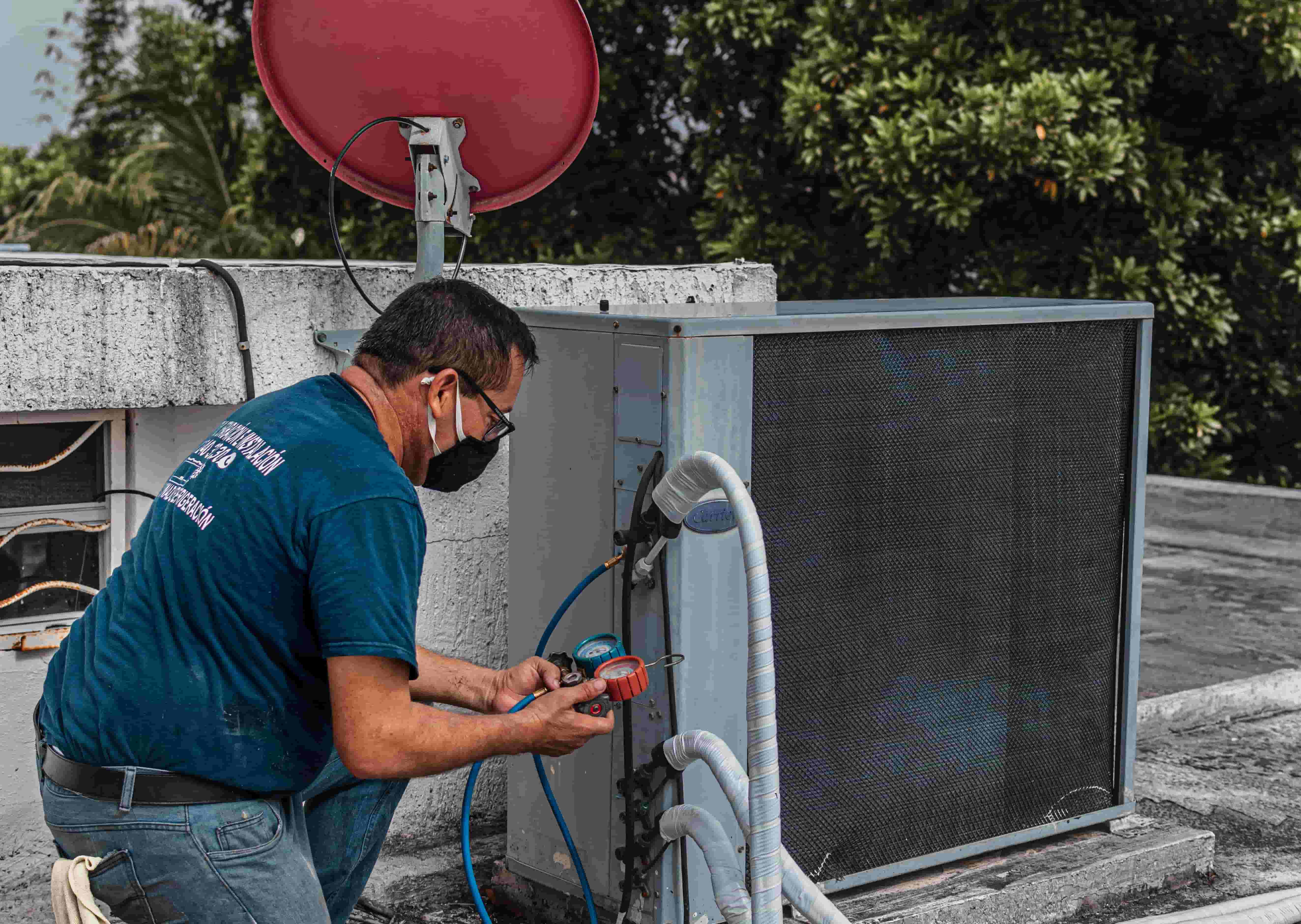
HVAC contractors work inside people's homes with live electrical, pressurized refrigerant lines, and gas connections. A refrigerant leak that damages hardwood floors, a wiring error that causes a fire, or an apprentice who falls from a ladder any of these can generate a six-figure liability claim before lunch. This guide covers what insurance an HVAC contractor needs in Pennsylvania and across the states Dragon serves, what it costs, and how Dragon Insurance quotes biBerk, CNA, and Attune to build your package. It also covers HVAC technician insurance for self-employed techs working under their own name: a one-person shop carries the same liability exposure on every service call, and we quote general liability, tools coverage, and a work vehicle policy sized to a solo operation.
Key takeaways
HVAC work combines electrical, plumbing, and mechanical risk in occupied homes and commercial buildings. Each coverage type in the stack addresses a different exposure, starting with general liability insurance, which pays for the bodily injury and property damage claims a service call can generate. Running a plumbing shop instead? Our plumber insurance guide covers the same stack for plumbing contractors.
General Liability (GL)
Covers bodily injury and property damage caused by your work. Refrigerant leaks that warp flooring, ductwork installation that damages drywall, or a customer who trips over your equipment GL pays defense costs and settlements. Standard limit: $1M per occurrence / $2M aggregate.
Commercial Auto
Required for every work van, truck, or vehicle used for business. Covers collision, liability, and comprehensive. Personal auto policies exclude commercial use any claim arising from a service call on a personal policy will be denied.
Workers Compensation
Required by Pennsylvania law for any HVAC business with employees. Covers medical expenses and lost wages for employees injured on the job. HVAC technicians face ladder falls, electrical shock, refrigerant exposure, and confined space risks. Failing to carry workers comp in PA can result in criminal charges.
Tools and Equipment
Covers your tools, HVAC equipment, refrigerant recovery machines, manifold gauges, and other contractor tools against theft, loss, or damage. Often added as an inland marine rider to a GL or BOP policy. Typical limit: $10,000 to $50,000 depending on equipment value.
Business Owner Policy (BOP)
Bundles GL and commercial property (including business equipment) in one policy at a lower combined cost. We quote BOP options from biBerk and our other business carriers, paired with separate commercial auto and workers comp.
Commercial Umbrella
Adds an extra layer of liability protection above your GL and commercial auto limits. Common for HVAC contractors who work on commercial buildings or sign contracts that require $2M to $5M in liability coverage. According to Insureon (updated August 2026), HVAC installation businesses pay an average of about $968 a year for a commercial umbrella.
HVAC general liability insurance pays for injuries and property damage your work causes, and it is the policy general contractors check first. According to Insureon (updated August 2026), HVAC installation contractors pay an average of $101 a month, or about $1,213 a year, for general liability.
According to Insureon (updated August 2026), these are the average premiums HVAC installation businesses pay, shown per year and per month. They are not Dragon quotes: your price typically moves with payroll, vehicle count, revenue, and claims history, and we quote your exact numbers from several business carriers in one call at 717-229-5115.
| Coverage Type | Average per Year | Average per Month | Notes |
|---|---|---|---|
| General Liability | About $1,213 | About $101 | $1M per occurrence / $2M aggregate is the usual contract limit |
| Business Owners Policy (BOP) | About $1,664 | About $139 | Bundles GL with property coverage for your shop and equipment |
| Workers Compensation | About $2,189 | About $182 | Priced per $100 of payroll; required in PA with even one employee |
| Commercial Auto | About $3,438 | About $287 | Work vans and trucks; driver records and vehicle count drive the price |
| Tools and Equipment | About $495 | About $41 | Inland marine for tools, recovery machines, and gauges |
| Commercial Umbrella | About $968 | About $81 | Extra liability above your GL and auto limits |
Pennsylvania requires every employer with one or more employees to carry workers compensation insurance. According to the PA Department of Labor & Industry, that applies even when the workers are part-time or are family members such as a spouse or children. A sole proprietor with no employees is one of the listed exclusions.
Pennsylvania does not use the NCCI class codes you may see in other states. HVAC payroll is classified under the state's own system, which the Pennsylvania Compensation Rating Bureau (PCRB) maintains, and premiums are priced per $100 of payroll, then audited at the end of each policy year against actual payroll. Labor & Industry warns that employers who fail to insure face criminal prosecution, with possible imprisonment and substantial fines for each day of noncompliance. We quote PA workers comp from Pie and biBerk side by side, so your crew is covered at the lowest rate we can find for your class.
Get an HVAC Contractor Insurance Quote
Dragon Insurance quotes biBerk, CNA, and Attune for HVAC contractors in PA, TX, VA, MD, OH, TN, and KY. One call builds your GL, commercial auto, workers comp, and tools coverage compared side by side.
HVAC contractor insurance in Pennsylvania comes down to three requirements, before any higher limits your contracts ask for:
Pennsylvania does not issue a statewide HVAC contractor license. Licensing is handled city by city, and requirements vary widely. Philadelphia requires HVAC contractors to hold a city contractor license in addition to state registration, and Pittsburgh issues its own Mechanical/HVAC trade license that requires passing an ICC exam. Many other Pennsylvania municipalities have no HVAC-specific license at all and rely only on the home improvement contractor registration described below. Because rules change from one city to the next, and because a general contractor's own contract can set an insurance requirement well above the city or state minimum, PA HVAC contractors should confirm both the local licensing rule and the certificate of insurance limits a job requires before bidding.
Under Pennsylvania's Home Improvement Consumer Protection Act (HICPA), any contractor who earns $5,000 or more per year from residential home improvement work, including HVAC installation and service, must register as a Home Improvement Contractor (HIC) with the PA Office of Attorney General. HIC registration requires proof of commercial general liability insurance with at least $50,000 in personal injury coverage and $50,000 in property damage coverage. That is a state registration floor, not a real-world coverage target. Most general contractors, property managers, and commercial accounts in Pennsylvania ask for $1,000,000 per occurrence and $2,000,000 aggregate in a signed contract before an HVAC contractor starts the job, so HIC registration minimums alone will not qualify a contractor for most commercial work.
On a commercial PA job, expect the general contractor or property manager to request a certificate of insurance (COI) before work begins. A typical COI request for HVAC subcontractors in Pennsylvania asks to be listed as an additional insured, shows GL limits of $1,000,000 per occurrence and $2,000,000 aggregate, confirms commercial auto and workers compensation are in force, and requires 30 days' notice of cancellation. Reviewing the contract's insurance clause before bidding, not after being awarded the job, avoids a last-minute scramble to raise limits or add an endorsement.
Workers compensation is mandatory in Pennsylvania for any HVAC business with even one employee, including part-time and seasonal workers. Sole proprietors without employees are not required to carry workers compensation under PA law but can optionally opt in, which provides coverage for job-site injuries that would otherwise come entirely out of pocket. Given the fall, electrical, and refrigerant exposure inherent in HVAC work, sole proprietors should strongly consider opting in.
Dragon Insurance quotes HVAC contractor insurance in Pennsylvania through biBerk, CNA, Coterie, Thimble, and Hiscox for general liability and business owner policies, and through Pie or biBerk for workers compensation. Comparing these carriers side by side in one call covers city licensing paperwork, HIC registration, and GC contract requirements without gaps in coverage.
Get your Pennsylvania HVAC contractor policy built around your city's rules and your contracts.
What insurance does an HVAC contractor need in Pennsylvania?
An HVAC contractor in Pennsylvania needs workers compensation with even one employee, including part-time workers and family members, under PA Department of Labor & Industry rules. Contractors doing $5,000 or more a year of residential work must register as a Home Improvement Contractor with the PA Attorney General, which requires proof of commercial general liability with at least $50,000 personal injury and $50,000 property damage coverage. Every work vehicle needs commercial auto. Most general contractors typically ask for $1,000,000 per occurrence and $2,000,000 aggregate on your certificate, so Dragon quotes those limits from biBerk, CNA, Hiscox, Coterie, and Thimble side by side.
How much does HVAC contractor insurance cost?
According to Insureon (updated August 2026), HVAC installation contractors pay an average of about $1,213 a year for general liability, $2,189 a year for workers compensation, and $3,438 a year for commercial auto. Your actual rate depends on revenue, payroll, vehicle count, work type, and claims history. Call Dragon at 717-229-5115 for a quote specific to your operation.
How much is HVAC insurance per month?
About $101 a month for general liability, according to Insureon (updated August 2026), based on what HVAC installation businesses pay on average. The same Insureon data puts workers compensation at about $182 a month, commercial auto at about $287 a month, and tools and equipment coverage at about $41 a month. Your monthly price typically rises with payroll, vehicle count, and claims history, and Dragon compares business carriers side by side so you see the lowest price for your crew size.
Does a self-employed HVAC technician need insurance?
Yes. A self-employed HVAC technician with no employees still needs general liability insurance and commercial auto coverage. GL protects against property damage or injury claims on customer properties a leaking refrigerant line, a damaged wall, or a customer who trips over your equipment. Commercial auto is required for any vehicle used for business. Self-employed technicians without employees are not required to carry workers compensation in Pennsylvania, but it is still worth considering since there is no employer coverage for a self-inflicted job-site injury.
Do HVAC contractors need to be bonded?
Pennsylvania does not require HVAC contractors to carry a surety bond as a condition of operating, but many commercial property owners, property managers, and general contractors require a contractor's license bond before awarding a contract. A contractor's bond (typically $10,000 to $50,000) protects the customer if the contractor fails to complete the work or meets financial obligations. Bonds are different from insurance a bond is not a claim against you but a financial guarantee to the customer. Dragon Insurance can help connect you with surety bonding in addition to your standard contractor coverage.
Can an HVAC contractor get a business owner policy (BOP)?
Yes. A business owner policy (BOP) bundles general liability and commercial property (including tools, equipment, and business contents) in one policy at a lower combined cost than separate coverages. We quote BOP options from biBerk and our other business carriers side by side. A BOP does not include commercial auto or workers compensation those require separate policies. For most small HVAC operations, a BOP plus commercial auto plus workers comp is the most cost-effective coverage structure.
What is tools and equipment insurance for HVAC contractors?
Tools and equipment insurance covers your HVAC tools, refrigerant recovery machines, manifold gauges, and other contractor equipment against theft, damage, or loss on job sites, in your van, or in transit. It is typically written as an inland marine endorsement added to a general liability or business owner policy. Standard limits run $10,000 to $50,000 depending on the total value of your equipment. Tools and equipment coverage fills a gap that GL and commercial auto leave: GL covers damage you cause to others; auto covers the vehicle; tools and equipment coverage protects your own gear. Dragon quotes this coverage through biBerk and CNA for HVAC contractors in PA, TX, VA, MD, OH, TN, and KY.
How much is general liability insurance for HVAC contractors?
General liability rates for HVAC contractors depend on your annual revenue, the type of work you do (residential service vs. commercial installation), and your claims history. The standard minimum for most commercial contracts and property managers in Pennsylvania and other Dragon footprint states is $1 million per occurrence and $2 million aggregate. Contractors doing commercial work often need $2 million per occurrence. Call Dragon at 717-229-5115 or get a free quote online Dragon quotes HVAC GL through biBerk, CNA, and Attune in one call so you can compare all three.
Does Pennsylvania require HVAC contractors to have a state license?
No. Pennsylvania does not issue a statewide HVAC contractor license. Licensing is handled by individual cities, so requirements vary widely. Philadelphia requires HVAC contractors to hold a city contractor license, and Pittsburgh issues its own Mechanical/HVAC trade license that requires passing an ICC exam, while many smaller Pennsylvania municipalities have no HVAC-specific license at all. Every HVAC contractor doing $5,000 or more per year in residential work still must register as a Home Improvement Contractor (HIC) with the PA Attorney General, regardless of city.
HVAC contractor insurance is not one-size-fits-all. Your coverage needs to match your revenue, your team size, your vehicles, and the type of work you do residential service, commercial installation, or both. Dragon Insurance quotes biBerk, CNA, and Attune side by side so you get the right limits at the right price without coverage gaps.
Average HVAC premiums (updated August 2026): GL $1,213, BOP $1,664, workers comp $2,189, commercial auto $3,438, tools $495, umbrella $968 a year.
Coverage required with one employee, including part-time workers and family members; criminal penalties for failing to insure.
HIC registration and the $50,000 personal injury / $50,000 property damage liability requirement.
PCRB maintains and administers Pennsylvania's workers compensation classification system.
Sources checked October 2026.
Coverage availability and pricing vary by carrier and state. Rates shown are estimates based on typical small HVAC contractor operations and are not guarantees. Dragon Insurance Services is licensed in PA, TX, VA, MD, OH, TN, and KY.
Explore Related Coverage
Ready to compare carriers and get a quote?
Dragon Insurance is an independent agency in Camp Hill, PA. We shop 30+ carriers to find your best rate.
Prefer to talk it through?
Get a real quote from a licensed advisor. English, Nepali, and Hindi spoken.
About the Author
Bimal GurungCEO, Agency Principal & Licensed Insurance Agent
Bimal Gurung is CEO and Agency Principal of Dragon Insurance Services, an independent agency in Camp Hill, PA that compares 30+ carriers for clients across Pennsylvania, Texas, Virginia, Maryland, Ohio, Tennessee, and Kentucky.
Meet the Dragon Insurance teamContinue Reading

Business
General Liability Insurance for Small Business Owners
11 min read

Business
PA Workers Comp for Employers - Rules and Penalties
14 min read

Business
E&O Insurance for Consultants, IT Pros and CPAs
13 min read

Business
Business Insurance Basics for Small Businesses
6 min read
Business
Plumber Insurance for Plumbing Contractors: Coverage & Cost
12 min read

Business
Commercial Van Insurance for Contractors
12 min read

Business
Moving Company Insurance: What Movers Need 2026
10 min read
Business
Hot Shot Trucking Insurance: Pickup & Gooseneck Coverage
11 min read