Loading
Preparing your coverage insights...
Our Locations
Loading
Preparing your coverage insights...
Complete guide to moving company insurance: what coverage types movers need (GL, commercial auto, cargo in transit, workers comp), cost breakdown by coverage, the cargo gap commercial auto doesn't fill, FMCSA interstate authority requirements, and how Dragon shops multiple carrier markets.
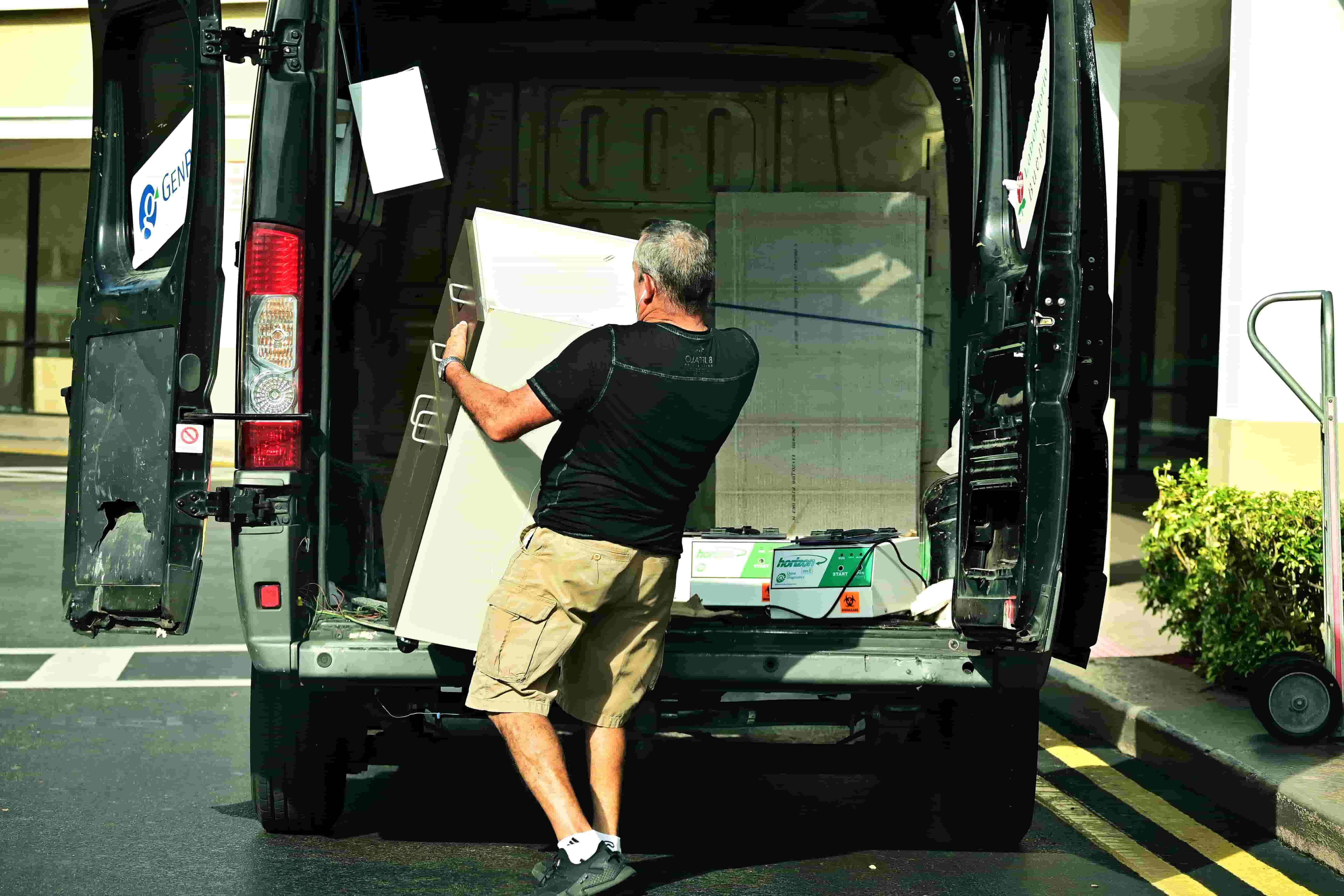
Every moving truck that pulls away from a driveway carries something your commercial auto policy will not cover: a client's belongings. Moving companies face liability from multiple directions at once, a scratched hardwood floor, a collision on the highway, an employee injury on a tight staircase. Standard commercial auto covers the truck in motion, but it does not cover the cargo inside. That gap is where small moving operations get wiped out. This guide covers what insurance a moving company needs, what it costs, and how Dragon Insurance shops your risk across multiple carrier markets to build the right package.
Key takeaways
Quick Answer
A complete moving company insurance package covers your vehicles, your employees, your clients' property, and your on-site liability. Most operations need all four of the following coverage types working together.
General Liability (GL)
Covers bodily injury and property damage caused by your crew during a move, a mover who scratches a hardwood floor, breaks a wall maneuvering a sofa, or causes a trip hazard on a client's property. Standard GL limit: $1M per occurrence / $2M aggregate.
Commercial Auto
Required for every vehicle used in the business. Covers collision, liability, and comprehensive on your moving trucks and vans. Interstate movers must file a BMC-91 with FMCSA showing at minimum $750,000 primary liability. Dragon places this federal operating authority coverage directly with Progressive, GEICO, and Trinity Underwriters, plus additional specialty and E&S markets reached through master brokerage relationships.
Cargo / Goods in Transit
Covers customers' belongings while being loaded, transported, and unloaded. Commercial auto does NOT cover cargo, this is a separate inland marine policy. Standard limit: $50,000 to $300,000 per load depending on the typical value of goods hauled.
Workers Compensation
Required by Pennsylvania law for any operation with employees, and in most other states. Covers medical expenses and lost wages for employees injured on the job. Moving is physically demanding, back injuries, dropped loads, and staircase accidents are common claims.
Tools and Equipment
Covers moving equipment, dollies, furniture blankets, straps, hand trucks, and lift gates, against theft, damage, and loss. Often added as a rider to a business owner policy (BOP) or GL policy at minimal additional cost.
Business Owner Policy (BOP)
Bundles GL and commercial property (including tools and equipment) in one policy at a lower combined cost than separate policies. Several markets in Dragon's panel offer BOP products for moving companies that can be paired with separate commercial auto and cargo coverage.
Figures below are general industry estimates. Not Dragon Insurance quotes. Call 717-229-5115 for your actual rate.
| Coverage Type | Typical Annual Cost | Notes |
|---|---|---|
| General Liability | $500 - $2,000/yr | Based on annual revenue and number of employees |
| Commercial Auto (per truck) | $2,000 - $8,000/yr | Higher for interstate authority; depends on MVR |
| Cargo / Goods in Transit | $500 - $2,000/yr | Limit should match max value of goods hauled |
| Workers Compensation | $1,500 - $5,000+/yr | Priced per $100 of payroll; rate varies by state |
| Tools and Equipment | $200 - $600/yr | Often bundled in a BOP |
| Full Package (1-truck operation) | $3,000 - $12,000/yr | Varies by state, revenue, and driving record |
The most common and costly mistake small moving companies make is assuming their commercial auto policy covers customers' belongings in the truck. It does not. Commercial auto liability covers bodily injury and property damage caused by the operation of the vehicle, not the contents being transported.
If your crew loads a client's furniture, electronics, and art into the truck and the truck is rear-ended, your commercial auto policy pays for vehicle damage and liability to the other driver. It does not pay to replace the client's belongings. Cargo insurance (also called goods in transit or inland marine coverage) is the separate policy that fills this gap.
Federal law under the Carmack Amendment governs interstate moving liability and requires movers to offer customers two valuation options: released value (60 cents per pound per article, the federal minimum, which is almost never adequate) and full value protection (which pays repair or replacement cost). Full value protection can be structured through your cargo policy if your underwriter agrees to it.
Get a Moving Company Insurance Quote
Dragon Insurance shops multiple carrier markets for moving companies in PA, TX, VA, MD, OH, TN, and KY. One call builds your GL, cargo, commercial auto, and workers comp package side by side.
Moving companies that transport household goods across state lines are regulated by the Federal Motor Carrier Safety Administration (FMCSA) and must obtain operating authority (MC number), a USDOT number, and file proof of insurance via BMC-91 before moving any interstate shipment.
Dragon Insurance is appointed to write this federal operating authority coverage directly with Progressive, GEICO, and Trinity Underwriters, and reaches additional specialty and excess and surplus (E&S) markets through master brokerage relationships for movers whose driving records, cargo type, or interstate exposure need a harder-to-place fit.
| Operation Type | FMCSA Required? | Minimum Liability |
|---|---|---|
| Interstate household goods mover | Yes (MC authority + DOT number) | $750,000 per FMCSA; $1M recommended |
| Intrastate mover (PA only) | PA PUC regulated | PUC requires proof of insurance; varies by operation |
| Intrastate mover (TX only) | TxDMV regulated | TxDMV sets requirements for household goods carriers |
| Local moves under 25 miles | Typically intrastate | GL + cargo still required; no federal filing |
What insurance do moving companies need?
Moving companies need four core types of insurance: (1) General liability, which covers property damage and bodily injury caused by moving operations on a client's property; (2) Commercial auto, which covers the moving trucks and vans in operation; (3) Cargo or goods in transit coverage, which covers customers' belongings while being transported (commercial auto does NOT cover cargo); and (4) Workers compensation, which is required by Pennsylvania, Texas, and most other states for any operation with employees. A business owner policy (BOP) can bundle GL and commercial property at a lower combined cost than separate policies.
How much does moving company insurance cost?
Moving company insurance costs depend on your number of trucks and drivers, annual revenue, whether you operate interstate or intrastate, cargo types, and your claims history. Interstate movers with FMCSA authority generally pay more than local intrastate operators due to higher liability minimums and broader exposure. Call Dragon Insurance at 717-229-5115 or get a free quote online for a same-day package quote covering GL, commercial auto, cargo, and workers comp.
What is liability insurance for a moving company?
Liability insurance for a moving company covers two separate exposures. General liability (GL) covers bodily injury or property damage your crew causes to clients and their property during a move, a broken doorframe, a scratch on hardwood floors, a trip hazard on a doorstep. Commercial auto liability covers bodily injury and property damage caused while operating your moving vehicles. GL and commercial auto liability are separate policies. GL covers on-site operations while commercial auto covers the truck on the road. Interstate movers also need a FMCSA-required $750,000 minimum primary auto liability filing (BMC-91).
Does moving company insurance cover damage to customer property?
Yes, but through different policies depending on where the damage occurs. Damage to customer belongings while being transported is covered by cargo or goods in transit insurance (an inland marine policy), not by commercial auto or general liability. Damage caused by your crew on the job site, a mover who drops a TV or scratches a doorframe, is covered by your GL policy. Under the Carmack Amendment, interstate movers must offer customers at least two valuation options: released value at 60 cents per pound (the minimum) or full value protection at a higher cost. Always confirm your cargo limit is adequate before taking on a high-value shipment.
Do moving companies need FMCSA authority?
Yes, for interstate moves. Any moving company that transports household goods across state lines must register with the FMCSA and obtain a USDOT number and MC number (operating authority). The carrier must file proof of insurance (BMC-91) with FMCSA showing at minimum $750,000 in primary liability, though most brokers and load boards require $1,000,000. Local movers operating entirely within a single state are regulated by state agencies, not FMCSA. Pennsylvania intrastate movers are regulated by the PA Public Utility Commission (PUC); Texas intrastate movers are regulated by TxDMV. Dragon Insurance is appointed to write this federal operating authority coverage directly with Progressive, GEICO, and Trinity Underwriters, and can access additional specialty and E&S markets through master brokerage relationships when a mover's risk profile needs a non-standard fit.
What is goods in transit insurance?
Goods in transit insurance, also called inland marine coverage or cargo insurance for movers, covers customers' belongings while being loaded, transported, and unloaded during a move. Commercial auto insurance does NOT cover the cargo inside a moving truck; it only covers liability for operating the vehicle. Goods in transit is the separate policy that fills that gap, with standard limits of $50,000 to $300,000 per load depending on the value of goods hauled. Under the Carmack Amendment, interstate movers must offer customers released value at 60 cents per pound or full value protection. Dragon shops goods in transit coverage across multiple carrier markets for moving companies in PA, TX, VA, MD, OH, TN, and KY.
How much is cargo insurance for a moving company?
Cargo insurance rates depend on the coverage limit you carry, the types of goods you haul, your annual revenue, and your loss history. High-value shipments of antiques, fine art, or electronics may require specialty underwriting at higher premiums. Cargo insurance is separate from your commercial auto and general liability policies. Dragon shops cargo coverage across multiple markets alongside the full moving company package so you see the total cost in one comparison. Call 717-229-5115 for a same-day rate.
Moving company insurance is not a one-policy product. Your operation needs GL, cargo, commercial auto, and workers comp working together, with limits that comply with FMCSA and state requirements and match your actual cargo and payroll exposure. Dragon Insurance shops multiple carrier markets side by side so you see exactly what you are buying and what gaps you have before you sign.
Coverage availability and pricing vary by carrier and state. Rates shown are estimates based on typical small moving company operations and are not guarantees. Dragon Insurance Services is licensed in PA, TX, VA, MD, OH, TN, and KY.
Explore Related Coverage
Ready to compare carriers and get a quote?
Dragon Insurance is an independent agency in Camp Hill, PA. We shop 30+ carriers to find your best rate.
Prefer to talk it through?
Get a real quote from a licensed advisor. English, Nepali, and Hindi spoken.
About the Author
Bimal GurungCEO, Agency Principal & Licensed Insurance Agent
Bimal Gurung is CEO and Agency Principal of Dragon Insurance Services, an independent agency in Camp Hill, PA that compares 30+ carriers for clients across Pennsylvania, Texas, Virginia, Maryland, Ohio, Tennessee, and Kentucky.
Meet the Dragon Insurance teamContinue Reading