Loading
Preparing your coverage insights...
Our Locations
Loading
Preparing your coverage insights...
A complete pricing guide to box truck insurance covering cost by truck size and use case, the coverage stack (commercial auto liability, physical damage, motor truck cargo, general liability), whether box truck operators need FMCSA operating authority or a CDL, and how to lower your premium.
Get a box truck insurance quote. One call compares the carriers we write side by side.

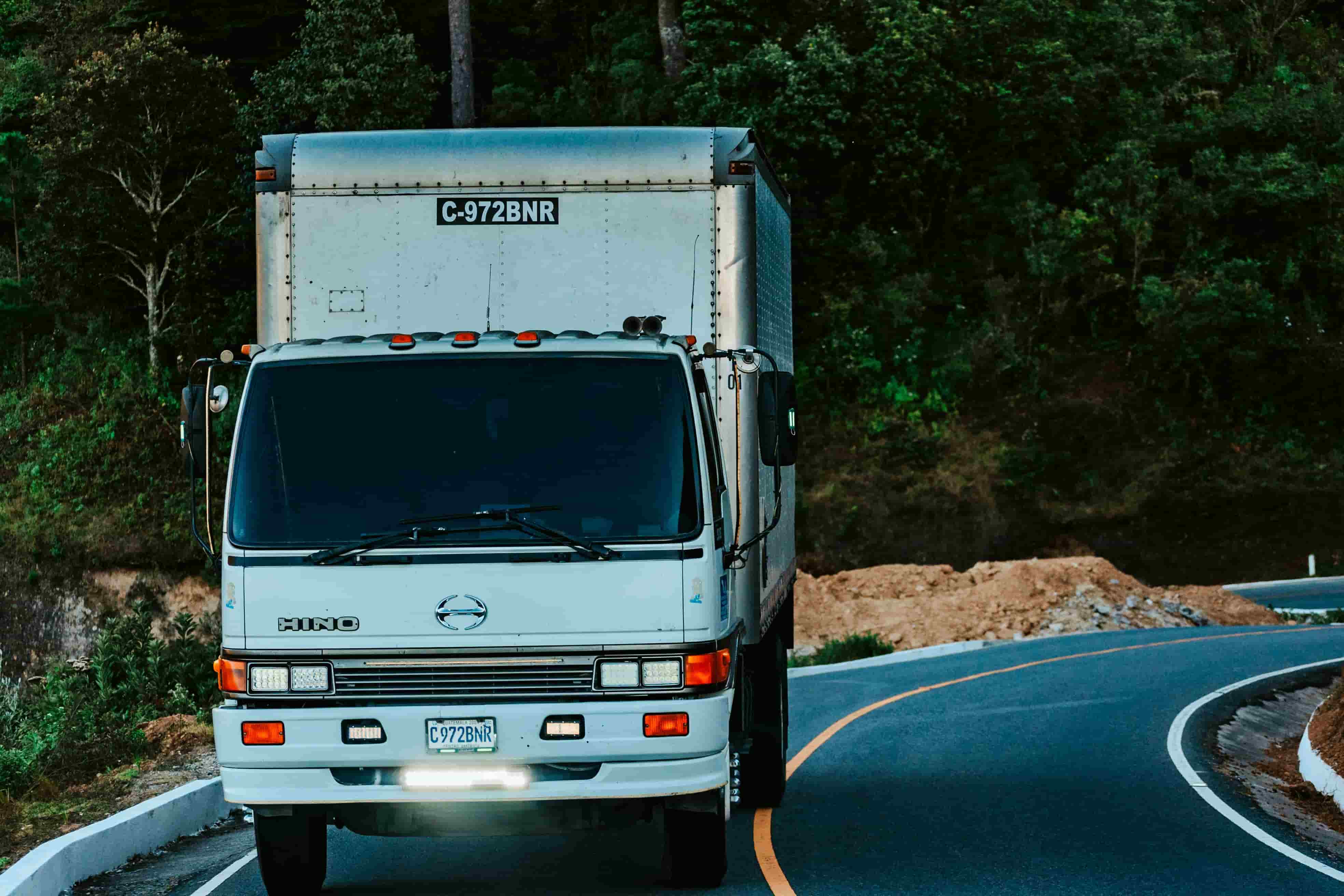
A box truck is not a small semi. It is a single-frame straight truck, cab and cargo box built on one chassis, with no separate trailer to insure and no long-haul lane in most cases. The person buying this policy is usually a local mover, a last-mile delivery contractor, or a small business owner hauling their own product across town, not an owner-operator running coast to coast. That difference changes the coverage stack, the federal filing question, and the price. As an independent agency, Dragon Insurance compares Progressive for lighter box truck auto, and is also appointed with GEICO and Trinity Underwriters for trucking-specific risk, on top of additional specialty and excess and surplus (E&S) markets through master brokerage relationships, for cargo-heavy and larger straight truck operations, to find the real number for your truck.
This guide covers box truck insurance cost and coverage specifically. If you are pricing a full moving company package, see our moving company insurance guide for the general liability, cargo, and workers compensation stack movers need. If you want published industry averages by truck type and by state, see the benchmark table in our commercial truck insurance cost guide.
Key Takeaways
Quick Answer
How much does box truck insurance cost?
Premiums can start around $200 a month for a clean-record truck with established authority, but the range runs into the thousands depending on your equipment, cargo, radius, authority age, and driving history. A non-CDL box truck under 26,001 pounds running local delivery on a clean record typically sits toward the lower end; a 26-foot regional truck or a brand-new for-hire authority sits higher. For published industry averages by truck type and state, see the benchmark table in our commercial truck insurance cost guide, then call 717-229-5115 to compare Progressive, GEICO, and Trinity Underwriters on your truck.
Most box trucks on this policy are non-CDL straight trucks under 26,001 pounds GVWR running local delivery, last-mile, or their owner's own goods, and that profile typically prices toward the lower end of the market when it is presented to underwriters correctly.
Call 717-229-5115 with your truck size, route, and driver list, and we compare Progressive, GEICO, and Trinity Underwriters in one call.
Truck size and operating profile move the price more than almost anything else on a box truck policy. For published industry averages by truck type, see the benchmark table in our commercial truck insurance cost guide. Here is how the main box truck profiles generally compare, from lowest to highest typical cost: a 16-foot local truck hauling an owner's own goods is the cheapest to insure; a small fleet of delivery or courier trucks runs above that; a 26-foot regional truck runs higher still, and a refrigerated or food-grade 26-foot truck adds further cost for the cargo risk; a brand-new for-hire authority on a 26-foot urban truck is the most expensive profile, reflecting the steep first-year pricing new authorities commonly see. Call 717-229-5115 or request a free quote with your truck size and use case for a real number.
Two box trucks of the identical size and year can carry very different price tags because the underwriter is really pricing the business behind the truck, not just the vehicle. Here is how the main box truck buyer profiles compare.
Small business owner hauling own goods
A contractor, retailer, or wholesaler using a 16-foot box truck to move their own inventory or equipment is generally the cheapest profile to insure. No broker cargo minimum applies, and the truck usually stays under a tight local radius.
Local delivery and last-mile contractor
Drivers running contracted routes for parcel, courier, or regional distribution networks sit in the small fleet range. Contracts often require a set liability limit and $100,000 in cargo coverage, which underwriters price into the policy.
Moving company box truck
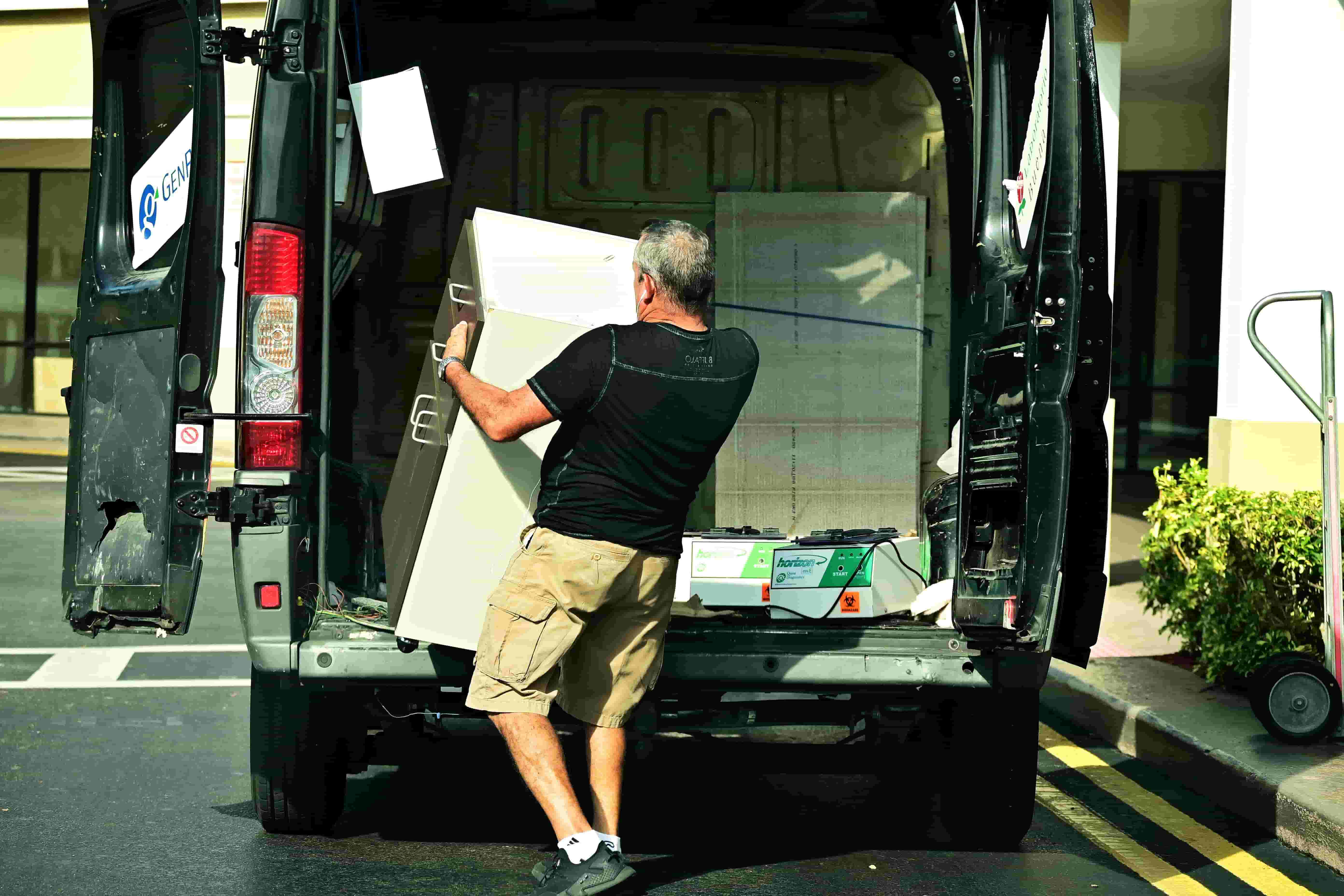
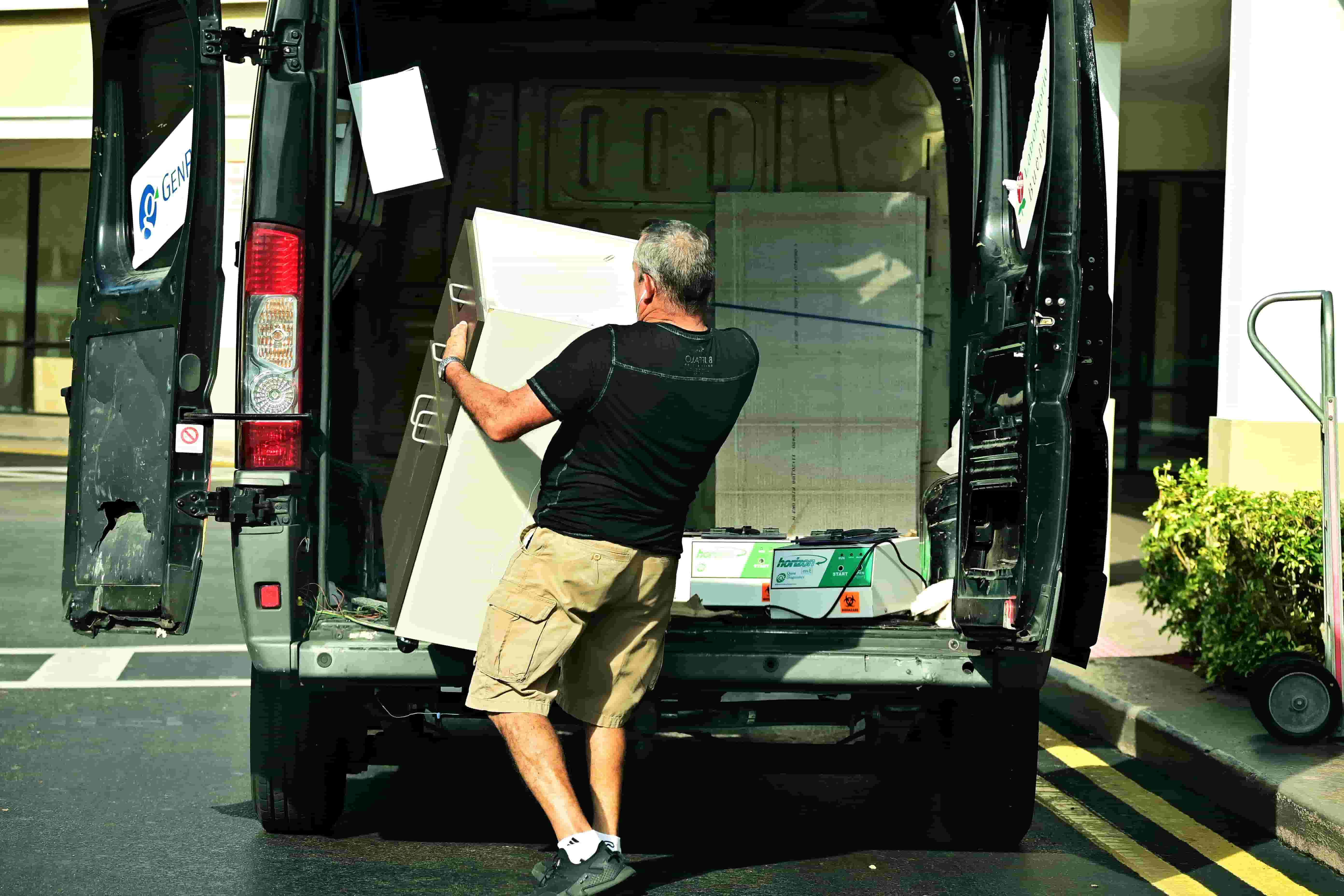
A mover needs the same auto and cargo pieces as any box truck operator, plus general liability for in-home damage and workers compensation for crew. See our moving company insurance guide for the complete package and cost drivers specific to movers.
Owner-operator under a new for-hire authority
Filing your own MC number to haul freight for other companies is the most expensive box truck profile, especially in year one, before you have loss history and a track record with a carrier.
Box truck insurance coverage is built from a core set of parts. Which ones you need, and at what limit, depends on whether you haul your own goods or freight that belongs to someone else.
For lighter box trucks on a local radius, Progressive generally writes competitive commercial auto policies. For larger straight trucks, cargo-heavy operations, or new for-hire authorities, Dragon is appointed with GEICO and Trinity Underwriters for trucking-specific risk, and also reaches additional specialty and E&S markets through master brokerage relationships for the full package.
Box truck driver insurance: if you hire drivers rather than driving yourself, the drivers are rated individually and they become one of the biggest levers on your premium. Every driver goes on the policy with their MVR pulled, so one driver with a recent at-fault accident or a suspension can move pricing for the whole account. Two practical consequences: run an MVR before you hire, not after, and tell your agent when a driver leaves so you are not paying for someone who no longer works for you. If a driver occasionally uses their own vehicle for the business, that is a non-owned and hired auto exposure, not something the truck policy picks up automatically.
This is where box trucks diverge most sharply from semi trucks, and it is worth getting right because it changes both your legal obligations and your insurance filing. According to FMCSA, operating authority, an MC number, is generally required only for carriers engaged in interstate for-hire transportation, meaning they haul regulated property that belongs to someone else, across state lines, for compensation.
Two groups of box truck operators typically do not need FMCSA operating authority:
Where authority does apply, the liability minimums scale with weight. For a vehicle with a gross vehicle weight rating (GVWR) of 10,000 pounds or less, the federal minimum is generally $300,000 in liability coverage. Above 10,000 pounds GVWR, non-hazardous for-hire freight generally requires a $750,000 minimum, according to FMCSA, though many brokers and shippers contractually require $1,000,000. If your operation needs authority, your insurer typically files the required BMC-91 proof of liability on your behalf.
One more distinction that matters for box trucks specifically: a truck with a GVWR under 26,001 pounds generally does not require a commercial driver's license (CDL) to operate, according to FMCSA. Since most 16-foot and many 26-foot box trucks fall under that threshold, box truck operations often draw from a much wider driver pool than a semi truck, which always requires a CDL regardless of weight. That is one reason box truck insurance is priced, and underwritten, differently from tractor-trailer coverage.
Cargo insurance is the piece most new box truck owners skip, and the one that causes the most painful claims. Standard commercial auto liability pays for damage you cause to other people and property. It does not pay to replace the freight sitting in your own box if it is damaged, stolen, or lost in an accident.
According to FreightWaves Checkpoint, $100,000 in motor truck cargo coverage is a common baseline that brokers and shippers require before they will tender general freight to a box truck. Higher-value loads, such as electronics or refrigerated freight, commonly push that requirement to $250,000 or more. If you own the goods you are hauling, such as a contractor moving equipment or a retailer moving stock, Dragon can also write lower cargo limits since there is no broker minimum to satisfy, only your own risk tolerance for the value on the truck.
Truck size and GVWR
A 16-foot truck is cheaper to insure than a 26-foot truck of the same age, because a larger box carries more value and more cargo exposure.
For-hire vs. private carrier
Hauling freight for other companies under your own authority costs more than hauling your own goods, because you are carrying broker cargo minimums and federal liability limits.
Radius and route type
A tight local radius is cheaper than a regional run. Delivery contractors on fixed routes tend to price lower than trucks with variable, longer-distance dispatch.
Cargo type and value
Dry general freight is the cheapest cargo to insure. Refrigerated goods, electronics, and high-value freight raise the cargo premium.
Driving record and experience
A clean license and, where applicable, a clean CDL and CSA history lower the rate. New drivers and recent violations raise it on every box truck profile.
Authority age
New for-hire authorities pay a first-year premium across every truck class. Once you build loss history, renewal pricing typically drops.
One intake. Every box truck carrier compared.
Get your real box truck insurance price in one call.
Tell us your truck size, use case, cargo, and radius once. We compare Progressive for lighter units, and bring GEICO, Trinity Underwriters, and additional specialty markets to the table for larger straight trucks and cargo-heavy operations, with identical limits.
What is a box truck and how is it different from a semi truck for insurance?
A box truck, also called a straight truck, is a single-frame vehicle with the cab and cargo box built on one chassis, unlike a semi, which pairs a separate tractor and trailer. Box trucks are typically used for local delivery, moving, and last-mile logistics rather than long-haul freight. Because they are lighter, usually run a shorter radius, and often do not require FMCSA operating authority, box truck insurance is generally priced and underwritten differently, and less expensively, than a tractor-trailer policy.
How much does box truck insurance cost?
Premiums can start around $200 a month for a clean-record truck with established authority, but the range runs into the thousands depending on your equipment, cargo, radius, authority age, and driving history. A 16-foot non-CDL local truck on a clean record sits toward the lower end of the market; a 26-foot regional truck runs higher; and a brand-new for-hire authority on a 26-foot urban truck is the most expensive profile in its first year, before loss history is established. Call 717-229-5115 for your actual rate.
Do box truck owners need FMCSA operating authority?
Not always. According to FMCSA, operating authority is generally required only for carriers engaged in interstate for-hire transportation of someone else's regulated freight. Private carriers hauling their own goods, and most purely intrastate operators, are typically governed by state DOT or PUC rules instead of a federal MC number. Where authority does apply, liability minimums generally start at $300,000 for trucks under 10,000 pounds GVWR and $750,000 above that weight for non-hazardous freight.
Do I need a CDL to drive a box truck, and does that affect insurance?
Most box truck operators do not need a CDL. A truck with a gross vehicle weight rating under 26,001 pounds can generally be driven on a regular license, according to FMCSA, which covers most 16-foot trucks and many 26-foot trucks. Since a semi truck always requires a CDL regardless of weight, box truck operations draw from a wider driver pool, which is one reason box truck insurance is priced separately from tractor-trailer coverage.
How much cargo insurance does a box truck need?
Motor truck cargo requirements depend on what you haul and for whom. According to FreightWaves Checkpoint, $100,000 in cargo coverage is a common baseline that brokers and shippers require before tendering general freight to a box truck, with higher-value or refrigerated loads pushing that to $250,000 or more. Owners hauling only their own goods can typically carry a lower limit, since there is no broker minimum to satisfy.
Does box truck insurance cost more for a moving company than for local delivery?
Moving companies generally need more coverage layers, not necessarily a higher auto premium. A mover needs the same commercial auto and cargo pieces as any box truck operator, plus general liability for in-home damage and workers compensation for crew, which raises the total package cost. A local delivery contractor on a fixed route often needs less general liability but a similar or higher cargo limit if contracts require it. See our moving company insurance guide for the full mover-specific coverage stack.
What coverage does a box truck insurance policy include?
A box truck policy typically includes commercial auto liability, physical damage (collision and comprehensive) on the truck, and motor truck cargo for the freight inside. Many operators add non-owned and hired auto coverage for flex vehicles at peak season, and movers and delivery contractors working on client property often bundle in general liability as well.
Can I insure a box truck I use for my own business without FMCSA filings?
Yes. If you are a private carrier hauling only your own goods, such as a contractor moving equipment or a retailer moving stock, you generally do not need FMCSA operating authority or the BMC-91 filing that goes with it, according to FMCSA. You still need commercial auto liability that meets your state's minimum, and it is worth carrying cargo and physical damage coverage even though no broker is requiring it, since your own goods and truck are still at risk.
How can I lower my box truck insurance cost?
Report your real operating radius instead of over-insuring a wider area, carry only the cargo limit your work actually requires, and keep your loss history clean, since a claim-free year earns renewal credit on every box truck profile. Comparing carriers at each renewal also helps, since the cheapest market for your truck size and use case can change from year to year.
Averages only get you so far. The accurate number comes from quoting your exact truck size, use case, cargo, and radius against multiple carriers with identical limits. That is what Dragon does in one conversation, at no cost to you. For the full commercial trucking coverage breakdown, see our commercial trucking insurance page.
Visit us: 1525 Cedar Cliff Dr STE 202, Camp Hill, PA 17011
Serving PA, TX, VA, MD, OH, TN, and KY. English, Nepali, and Hindi spoken.
Moving Company Insurance
The full GL, cargo, and workers comp package movers need.
Read more

Commercial Truck Insurance Cost
Published 2026 averages by truck type and state, plus what moves your premium.
Read more
Hot Shot Trucking Insurance
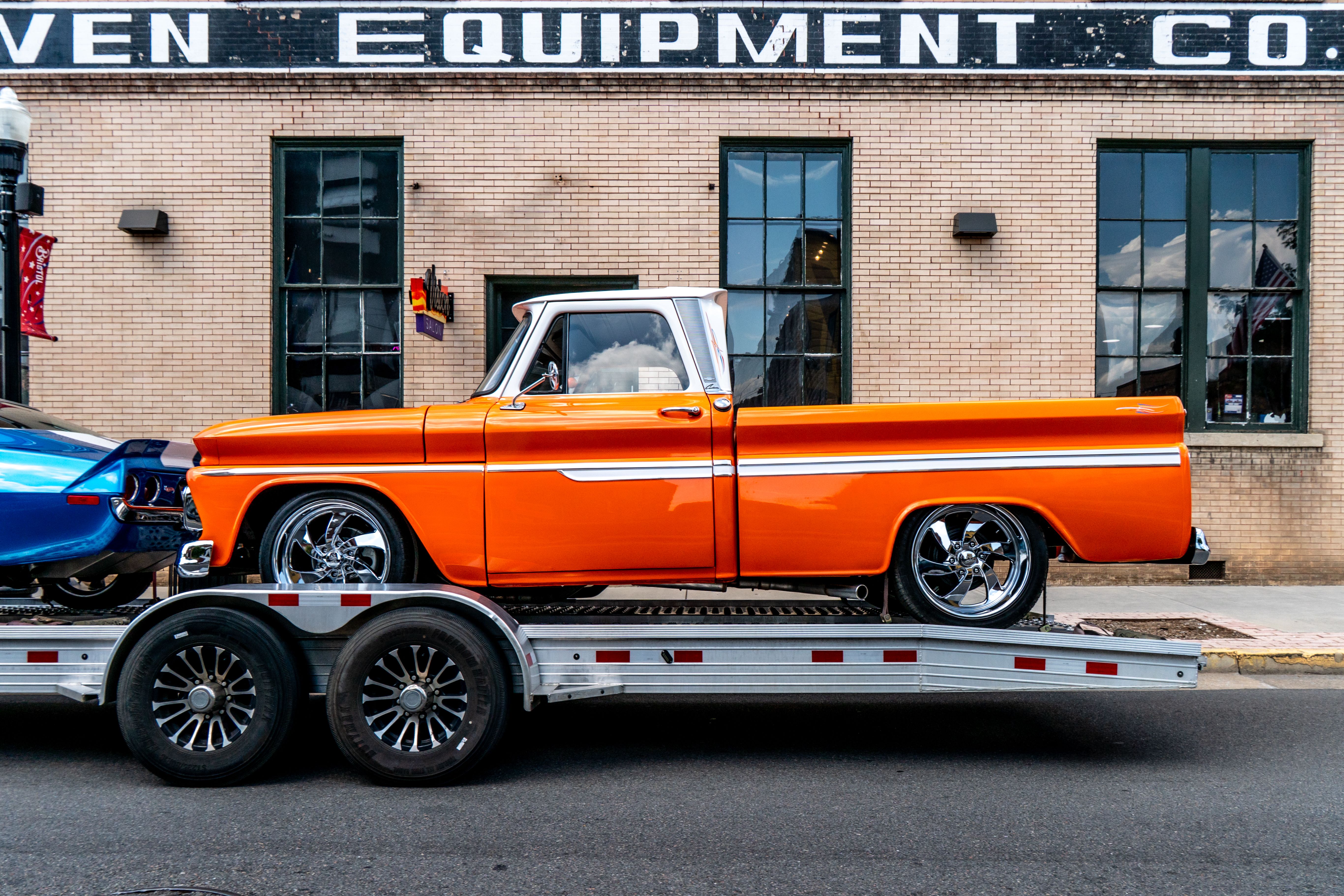
Coverage and cost for hot shot haulers running a one-ton and gooseneck.
Read more
Dragon Insurance Services LLC is a licensed independent insurance agency. Cost figures in this article reflect 2026 third-party rate data and our agency's quoting experience across PA, TX, VA, MD, OH, TN, and KY; they are estimates, not guaranteed rates. Actual premiums vary by truck size, use case, cargo, driving record, and state, and are subject to underwriting approval. Contact us for a personalized quote.
Explore Related Coverage
Ready to compare carriers and get a quote?
Dragon Insurance is an independent agency in Camp Hill, PA. We shop 30+ carriers to find your best rate.
Prefer to talk it through?
Get a real quote from a licensed advisor. English, Nepali, and Hindi spoken.
About the Author
Bimal GurungCEO, Agency Principal & Licensed Insurance Agent
Bimal Gurung is CEO and Agency Principal of Dragon Insurance Services, an independent agency in Camp Hill, PA that compares 30+ carriers for clients across Pennsylvania, Texas, Virginia, Maryland, Ohio, Tennessee, and Kentucky.
Meet the Dragon Insurance teamContinue Reading