
Loading
Preparing your coverage insights...
Our Locations
Loading
Preparing your coverage insights...
Pennsylvania requires a bakery to carry workers compensation from its first employee and nothing else, no general liability and no product liability. The requirement arrives from customers instead, and it arrives at one predictable moment: the first sale through a shop the baker does not own. At that crossing point labeling flips from optional to mandatory with a full allergen declaration, FDA registration under Section 415 may trigger, a certificate of insurance request lands asking for additional insured status rather than certificate holder status, and BLS injury rates move from 2.0 per 100 workers at retail bakeries to 4.8 at commercial ones. This guide covers PA operating rules, the $35 Limited Food Establishment path, the recall expense gap that neither general nor product liability pays, and 2026 national cost benchmarks.
Get a business insurance quote. One call compares the carriers we write side by side.
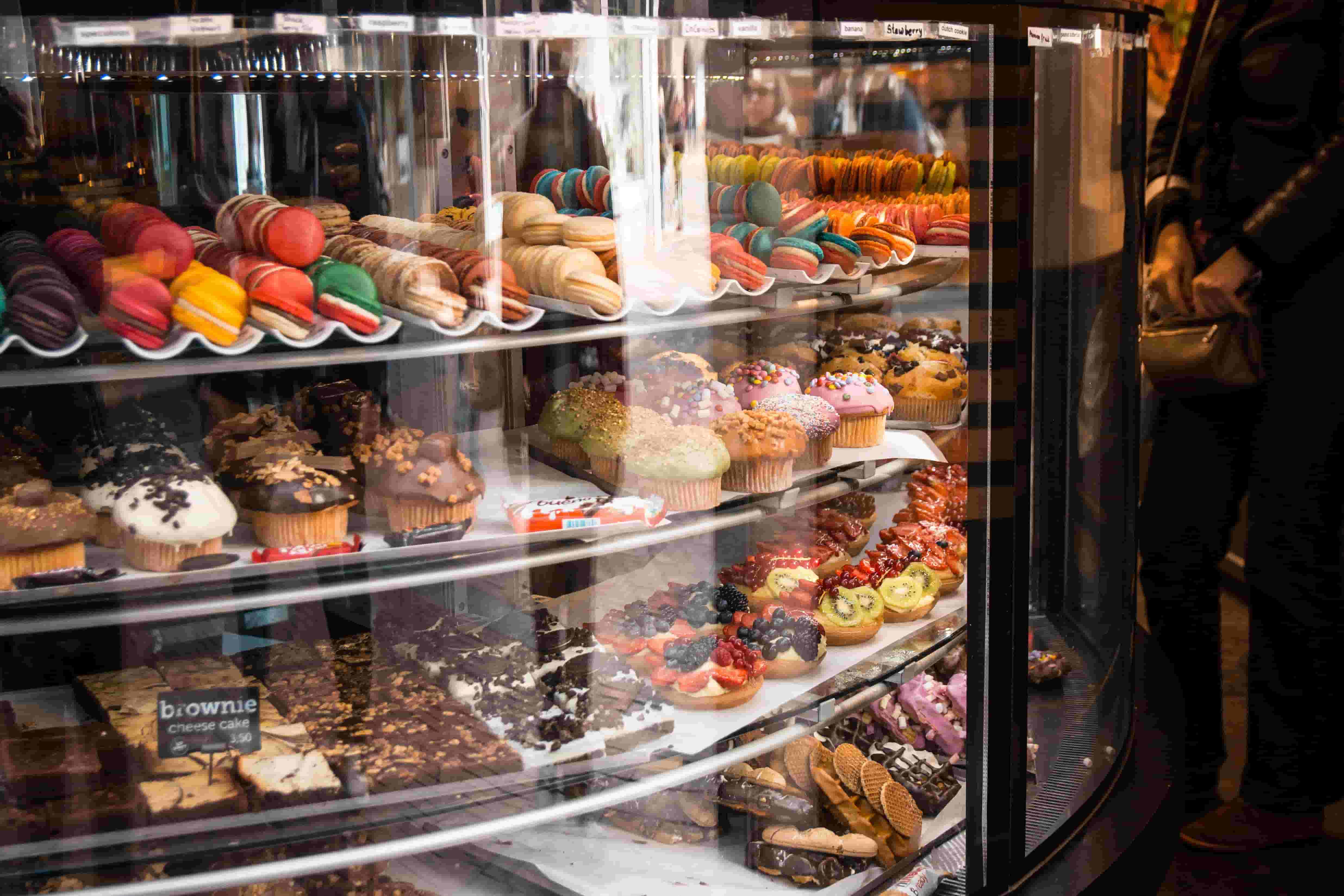
The coffee shop three blocks over wants to stock your scones. Two dozen a week, standing order, paid on delivery. It is the first money your bakery has ever made that did not arrive one croissant at a time. Then they send you a form: certificate of insurance, $1,000,000 per occurrence, your business named as additional insured, before the first delivery.
That one order changes four things at once: your labeling, your federal registration status, your liability, and, for the first time, whether anyone actually requires you to carry insurance. In Pennsylvania, nobody makes you insure a bakery. Your first wholesale customer does.
Quick Answer
What insurance does a Pennsylvania bakery need? Pennsylvania legally requires only one coverage: workers compensation, from your first employee. The state mandates no general liability and no product liability for a bakery. Everyone else does. Wholesale buyers, farmers markets, landlords, and event venues typically ask for $1,000,000 per occurrence and $2,000,000 aggregate with products-completed operations, and increasingly want additional insured status rather than a certificate. A Business Owners Policy for a small Pennsylvania bakery generally runs $65 to $175 a month based on national benchmarks, with workers compensation adding roughly $125 to $176 a month once you have staff.
Before insurance enters the picture, Pennsylvania has to let you bake. Which path you take depends on where the oven is (Food Safety Act, 3 Pa.C.S.A. 5721 to 5737; license requirement at 7 Pa. Code 46.1141).
You need a Retail Food Facility License from the Pennsylvania Department of Agriculture before you operate, not after.
You register as a Limited Food Establishment. The fee is $35, and the Department asks you to apply at least 60 days before you plan to operate, because a sanitarian has to inspect your home kitchen first. If your water comes from a private well, it has to be tested annually for coliform and for nitrate and nitrite.
The home-kitchen rules in the Department of Agriculture application packet are stricter than most bakers expect, and they are not negotiable:
One thing bakers regularly miss: Department of Agriculture approval does not imply zoning compliance. Your township can still say no after the state says yes.
The line is time and temperature control. TCS (potentially hazardous) foods are prohibited, ruling out cheesecakes, pumpkin pies, cream, custard and meringue pastries, and any baked good containing meat or cheese. Allowed: cakes, breads, cookies, rolls, muffins, brownies, fruit pies, and pastries.
A detail almost nobody mentions, and it saves real money: the Food Employee Certification requirement does not apply to facilities that handle only non-TCS foods. A bakery selling only shelf-stable goods may be exempt from the certified manager requirement entirely. Confirm your menu before budgeting for it.
Now the part everyone gets backwards. Workers compensation is required from your first employee, no minimum headcount, no grace period. Per form LIBC-200, coverage must be in place day one, for full-time, part-time and seasonal workers alike. The college student decorating cupcakes on Saturdays counts.
And that is the whole list. Pennsylvania requires no general liability and no product liability. You can legally sell to the public every day carrying no liability coverage at all. So who does require it? Everyone you want to do business with, and the moment they show up is predictable.
Just hired your first employee?
Pennsylvania wants comp in force their first day, not their first paycheck. Call and we place it before the shift starts, and quote your liability at the same time.
A bakery is unusual. A restaurant serves the person in front of it for its entire life, and a retail store sells what somebody else made. A bakery can become a manufacturer overnight, the day it first sells through a shop it does not own. That crossing point is where everything moves.
Sold direct to the consumer in your own shop, Pennsylvania requires no label on the product at all, just ingredient information on request. The moment that same scone is sold at a retail facility you do not own, full labeling is required:
The same packet flags it: facilities that wholesale may need to register with the FDA under FSMA Section 415, 21 U.S.C. 350d. Exemptions exist for private-residence businesses and businesses whose primary sales are retail direct to consumers. Get your answer before a buyer asks for your registration number.
Pennsylvania never asked. Your buyer will. The common baseline for food vendors is $1,000,000 per occurrence and $2,000,000 aggregate, with products-completed operations, typical rather than fixed since the buyer sets their own number.
These two phrases appear one line apart on the same form and mean completely different things:
A bakery with five wholesale accounts often needs five endorsements. We set them up when we place your policy and reissue certificates the same day, so a buyer's compliance deadline never costs you the account.
Already have a buyer's compliance form in hand?
Send us the limits they are asking for and we quote general liability with products-completed operations, add them as additional insured, and get your certificate issued before their deadline.
PIRG Education Fund's Food for Thought 2026, covering 2025, counted 320 FDA and USDA recalls tied to 1,003 illnesses and 22 deaths. The single largest cause was not a pathogen: undeclared allergens accounted for 38.8 percent of all recalls, led by milk (20.6%), tree nuts (16.8%), wheat (7.6%), eggs (6.1%) and sesame (5.3%). Milk, tree nuts, wheat and eggs are the top four allergens by recall share, and also the four core ingredients of a bakery. Your product line is built from the ingredients that cause the most recalls in the country.
That is only half the story. A 2026 study in Foods analyzed 24,761 recall records from 2013 to 2025 and found microbiological recalls carried 6.2 times higher odds of a Class I classification than allergen recalls, Class I being the category with a reasonable probability of death. Allergens lead on frequency. Pathogens lead on severity. Allergen labeling is a daily discipline; product liability with adequate limits is the backstop for the rare event. We quote both, because buying only for the common claim leaves you exposed on the expensive one.
Sesame, the ninth allergen
Sesame became the ninth major allergen under the FASTER Act, effective January 1, 2023. The FDA noted in a September 26, 2023 press announcement that some manufacturers were intentionally adding sesame to products rather than prevent cross-contact, a result the agency does not support. If sesame is anywhere in your facility, it belongs on your labels.
This is the gap that costs bakeries the most, because the policies people already own sound like they cover it. General liability and product liability pay for bodily injury caused by your product. Somebody eats the wrong thing, has a reaction, and files a claim, and those policies handle that well.
Neither one pays for the recall itself: retrieving product, notifying distributors, shipping, storage, disposal, or the income lost while production stops. Those are first-party costs, and they need a recall endorsement or a standalone recall policy.
Picture the bakery that went wholesale six months ago: a mislabeled batch sitting in fifteen locations, every shop needing a call, every unit needing to come back, and no budget for the trucks or the lost production. We add recall coverage at the same time we place your product liability, so the policy matches how you actually sell.

Be skeptical of anyone who tells you how often bakeries get sued. No public dataset of bakery insurance claims frequency exists. What does exist is federal injury data, and it tells a clear story. Bureau of Labor Statistics 2023 rates per 100 full-time workers:
Read it honestly. A retail bakery is safer than a full-service restaurant, 2.0 against 3.2. That should show up in how your workers comp is classified. But a commercial bakery runs 4.8, 2.4 times the retail rate, the same crossing point measured a third independent way.
OSHA lists flour as a combustible dust; its National Emphasis Program (CPL 03-00-006) names commercial bakeries, and 29 CFR 1910.263 is a bakery-equipment standard restaurants have no equivalent of. This is a commercial-production hazard, not a six-person retail shop hazard. A mixer and proofing cabinet behind a display case is not the concern. Silos and pneumatic flour conveying are, and it changes how the risk gets underwritten.
Two things first. All published bakery premium data is national, not Pennsylvania-specific. Any page claiming a PA rate is making it up. And the two most-cited sources disagree, for a reason worth understanding:
Putting those together, the honest framing for a small Pennsylvania bakery:
You will see a figure quoted online: a bakery fully covered for $65 to $75 a month. That number is real, but it only holds for an owner-operator with no employees. The moment you hire one person part-time, Pennsylvania's workers comp mandate applies and it is not a full package, roughly doubling or tripling the figure. We quote both scenarios so you know what your first hire really costs.
As an independent agency, we put your bakery in front of markets including biBerk, Hiscox, CNA, Coterie, Thimble, Three and Simply Business and compare what each does with your class code, wholesale percentage, and payroll. Carriers price bakeries very differently once wholesale enters the picture.
The problem
A buyer wants a certificate and you have nothing to send
A compliance form asks for $1M per occurrence and additional insured status, delivery date already on the calendar. You have never bought liability coverage because Pennsylvania never made you.
What Dragon does
We place general liability with products-completed operations, add the buyer as additional insured, and issue the certificate the same day.
The problem
You hired a weekend decorator and skipped workers comp
Coverage is required from the first employee, part-time and seasonal included. Plenty of bakeries assume a Saturday helper does not count. The state does not see it that way.
What Dragon does
We place comp before the first shift and classify your payroll against the retail bakery rate where it supports it, which is where the savings live.
The problem
You have only ever gotten one quote, from one company
A captive agent sells what their one company offers at the rate that company sets. Bakeries price very differently across carriers once wholesale enters the picture, so one quote tells you almost nothing.
What Dragon does
We compare more than 30 top carriers in Pennsylvania and place your bakery with whichever one reads your wholesale mix most favorably, so you get the best rate available for your risk instead of whichever company an agent happens to represent.
Dragon Insurance Services has placed commercial coverage from Camp Hill, minutes from Harrisburg, since 2018, protects more than 2,500 families and businesses and is licensed across PA, TX, VA, MD, OH, TN and KY, so a wholesale account across a state line does not mean starting over. For how the liability and property bundle is built, see our Business Owners Policy guide, and if you also run a cafe seating area, our restaurant insurance guide covers the on-premises side.
Lachu Sharma
“Great price. I saved $1,100 a year by switching with them. Best insurance agency in York, PA. Thank you team Dragon.”
Subash Rai
“Great price. One of the best agency to explain me my coverage and finding me the policy that fit my need. Thank you Dragon Insurance and agent Manju for helping me out. You guys are best.”
Get your bakery insurance quote
General liability with products-completed operations, product recall, property, and workers compensation quoted together, with your wholesale buyer added as an additional insured before your first delivery.
Visit us: 1525 Cedar Cliff Dr STE 202, Camp Hill, PA 17011
Does Pennsylvania require bakery insurance?
Only one coverage. Pennsylvania requires workers compensation from your first employee, no minimum headcount, coverage in force day one (form LIBC-200). The state mandates no general liability or product liability. In practice, your customers require it instead: wholesale buyers, farmers markets and venues set their own insurance conditions before they will do business with you.
How much does bakery insurance cost in Pennsylvania?
Published data is national, not Pennsylvania-specific, so treat these as benchmarks. A Business Owners Policy generally runs $65 to $175 a month, roughly $800 to $2,100 a year (Insureon median to MoneyGeek 2026 average). Standalone general liability typically runs $35 to $115 a month, and workers compensation adds roughly $125 to $176. Payroll and wholesale percentage move your number most.
Is a bakery really fully covered for $65 to $75 a month?
Only if you have no employees. That figure describes an owner-operator with a small Business Owners Policy and nothing else. The moment you hire anyone, even part-time, Pennsylvania's workers compensation mandate applies and it is no longer a full package, typically doubling or tripling the monthly figure. Ask us to quote both scenarios before you hire.
What changes when I start selling my baked goods wholesale?
Four things at once. Your labeling flips from optional to mandatory, now requiring a full ingredient list and allergen declaration. Federal FDA registration may trigger under FSMA Section 415. Your liability moves onto shelves you do not control. And your buyer sends a certificate of insurance request, commonly asking for $1,000,000 per occurrence and $2,000,000 aggregate with products-completed operations.
What is the difference between a certificate holder and an additional insured?
Certificate holder means they get told if your policy cancels, nothing more, a notification, not coverage. Additional insured means they are actually covered under your policy if their customer is harmed by your product and sues them. Wholesale buyers increasingly require additional insured status. Endorsements typically run $25 to $75 each; what matters is confirming one was actually issued.
Does product liability insurance pay for a product recall?
No, and this is the most expensive misunderstanding in the industry. General liability and product liability pay for bodily injury caused by your product. Neither pays the first-party cost of the recall itself: retrieving product, notifying distributors, shipping, storage, lost income and brand rehabilitation. Those costs require a recall endorsement or a standalone recall policy.
What does a Pennsylvania Limited Food Establishment registration cost and how long does it take?
The fee is $35, and you must apply at least 60 days before you plan to operate, since a sanitarian has to inspect your home kitchen first. Private well water needs annual testing. Department approval does not imply zoning compliance, so your township can still say no after the state says yes.
What baked goods are not allowed under a PA Limited Food Establishment registration?
Anything requiring time and temperature control for safety (TCS foods), which prohibits cheesecakes, pumpkin pies, cream, custard and meringue pastries, and baked goods containing meat or cheese. Allowed items cover most of a bakery menu: cakes, breads, cookies, rolls, muffins, brownies, fruit pies and pastries.
Does my bakery need a certified food protection manager?
Possibly not. The certification requirement does not apply to facilities handling only non-TCS foods, so a bakery selling only shelf-stable goods may be exempt. Add cheesecakes, cream pastries or anything with meat or cheese, and that changes. Confirm against your menu before budgeting for it.
Is a bakery more dangerous to work in than a restaurant?
Depends which kind. BLS 2023 data reports 2.0 injuries per 100 full-time workers at retail bakeries versus 3.2 at full-service restaurants, so retail bakeries are measurably safer. But commercial bakeries run 4.8, 2.4 times the retail rate. The same wholesale crossing point that changes your labeling also changes your injury exposure and how your workers comp should be classified.
Does insurance cover a wedding cake that does not get delivered?
Generally no. A cake that arrives late, wrong, or not at all is a breach of contract problem, not an insurance problem, solved by a limitation of liability clause in your cake contract, a conversation for an attorney. Liability insurance responds to bodily injury or property damage claims, not to a disappointed customer.
Dragon Insurance Services LLC is a licensed independent insurance agency. Cost figures are national third-party benchmarks for illustration, not quotes or guaranteed rates, and actual premiums vary by risk profile, coverage selections, payroll, and underwriting approval. No Pennsylvania-specific bakery premium data is published, and no public dataset of bakery claims frequency exists. Pennsylvania Department of Agriculture and Department of Labor and Industry requirements reflect published guidance as of 2026 and are subject to change. This page is general information, not legal advice. Verify current licensing, labeling, and FDA registration requirements with the relevant agency. Contact us for a personalized quote.
Explore Related Coverage
Ready to compare carriers and get a quote?
Dragon Insurance is an independent agency in Camp Hill, PA. We shop 30+ carriers to find your best rate.
Prefer to talk it through?
Get a real quote from a licensed advisor. English, Nepali, and Hindi spoken.
About the Author
Bimal GurungCEO, Agency Principal & Licensed Insurance Agent
Bimal Gurung is CEO and Agency Principal of Dragon Insurance Services, an independent agency in Camp Hill, PA that compares 30+ carriers for clients across Pennsylvania, Texas, Virginia, Maryland, Ohio, Tennessee, and Kentucky.
Meet the Dragon Insurance teamContinue Reading

Business
Coffee Shop Insurance in Pennsylvania
10 min read

Business
Best Hair Salon Insurance in Pennsylvania
12 min read
Business
General Liability Insurance for Small Business Owners
11 min read

Business
E&O Insurance for Consultants, IT Pros and CPAs
13 min read
Business
Restaurant Insurance: Your BOP Does Not Cover Liquor
12 min read