Loading
Preparing your coverage insights...
Our Locations
Loading
Preparing your coverage insights...
A guide for condo and HOA board members covering the three master policy structures (bare walls, single entity, all-in), the association's own property and liability coverage, directors and officers (D&O) liability for board members, mandatory fidelity and crime coverage, and how premiums funded through dues affect every owner.
Get an HOA or condo master policy quote. We quote the master policy and board D&O together for associations and property managers.
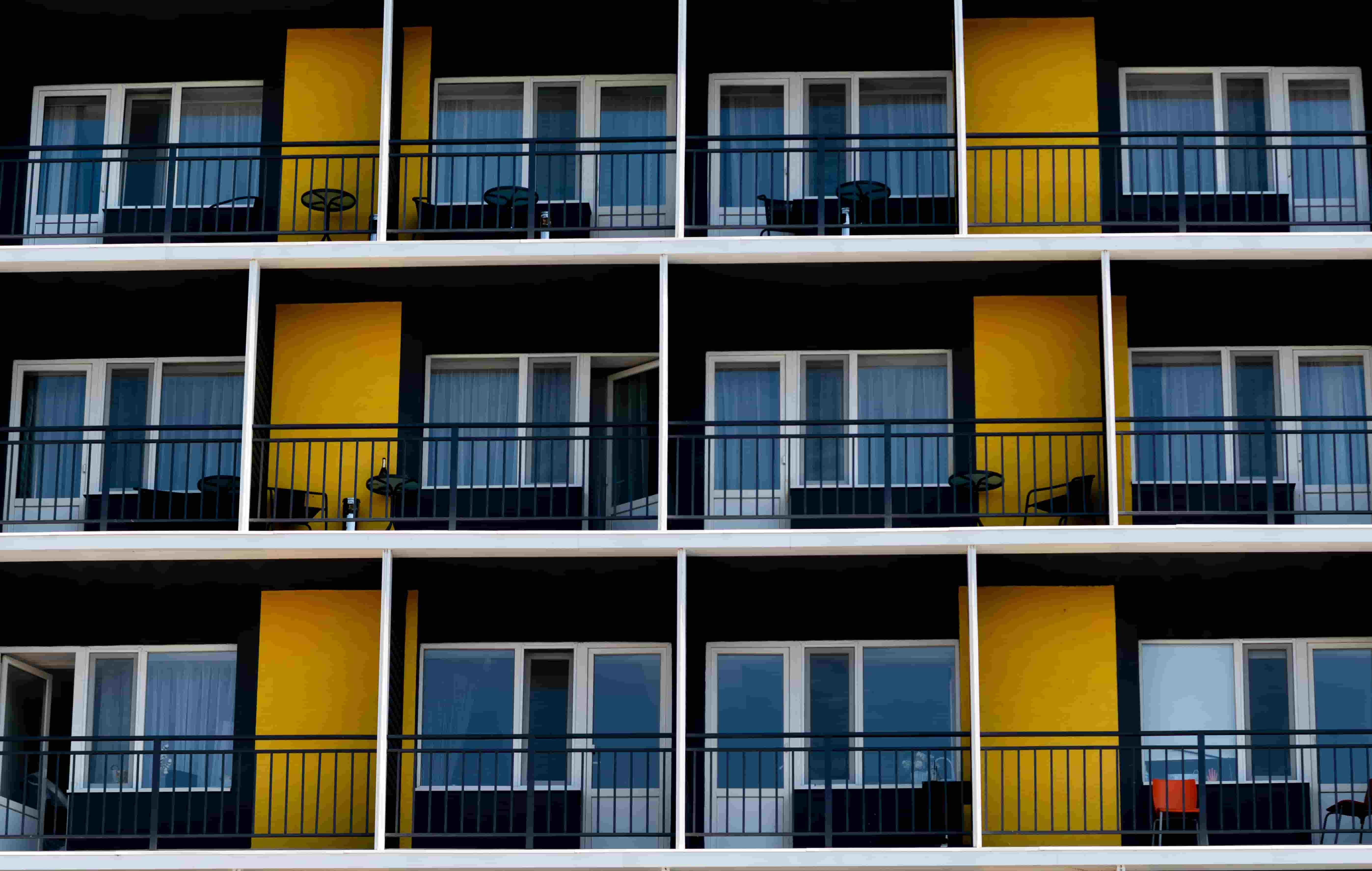
If you sit on a condo or homeowners association board, the master insurance policy is one of the most important documents you oversee, and one of the least understood. According to the Foundation for Community Association Research, roughly 373,000 community associations serve nearly 80 million Americans, close to one-third of the entire U.S. housing stock. Every one of those communities depends on a board making the right calls about coverage, and getting the master policy wrong does not just create a paperwork problem. It can leave the association, its board members, and every homeowner personally exposed.
This guide is written for board members, not unit owners. If you are a condo owner looking for information on your own individual policy, read our companion guide to condo insurance (HO-6) coverage instead. Here, we are covering what the association itself needs to carry: the master policy structure, common area coverage, the board's own liability exposure, and the fidelity and crime coverage that protects your community's funds.
Key Takeaways
Quick Answer
What does an HOA or condo association master policy cover?
A master policy covers the shared property of a condo or homeowners association: the building structure (to a degree that depends on the policy type), common areas like lobbies, hallways, pools, clubhouses, and parking structures, and the association's own liability if someone is injured on association property. A complete master policy package also includes directors and officers (D&O) liability to protect board members personally, and fidelity or crime coverage to protect association funds from theft or embezzlement. It does not cover the inside of individual units or unit owners' personal belongings; that is the unit owner's own HO-6 policy.
The master policy is the insurance contract the association itself owns and pays for. It is placed in the name of the HOA or condominium association, not any individual owner, and it is the board's legal responsibility (usually spelled out in the governing documents, the CC&Rs, and applicable state statutes) to keep it in force and adequately funded.
A complete master policy is not a single form. It is typically a package built from several coverage parts working together: property coverage for the building and common areas, general liability for injuries on association property, D&O liability for the board's decisions, and fidelity/crime coverage for the association's money. Boards that only think about the property portion, the part that pays for a damaged roof or a burst common-area pipe, are often the same boards that get blindsided by a board member lawsuit or a bookkeeper who quietly drained the reserve account.
Every board should know exactly which of the three common master policy structures its association carries, because the choice determines both the association's own insurance cost and how much interior coverage every unit owner in the community needs to buy separately.
Bare Walls
Covers only the building as originally built up to the unfinished interior surface of unit walls: framing, roof, exterior walls, and shared wiring and plumbing. Everything inside a unit, including original drywall, flooring, cabinets, and fixtures, is the unit owner's responsibility.
Single Entity
Extends coverage to the original fixtures and finishes that were installed by the builder, such as original flooring, cabinetry, and built-ins. Upgrades or replacements a unit owner installs afterward are not covered by the master policy.
All-In
The broadest structure. Covers nearly all original interior finishes and fixtures installed by the builder throughout every unit. Unit owners are still responsible for personal property, later improvements, and their own liability.
Why this matters to your board, not just your owners
Boards sometimes assume the master policy structure is only a unit-owner concern. It is not. A bare walls policy generally carries a lower total insured value for the association's own coverage, but it also means more disputes at claim time over where the association's responsibility ends and the owner's begins, disputes your board will be the one fielding. Put the master policy type in writing, in your community newsletter or annual disclosure, so owners know exactly what their own HO-6 policy needs to cover. For the full breakdown of what an individual unit owner's HO-6 policy should include under each structure, see our condo insurance (HO-6) guide for unit owners.
Renewing your association's master policy?
Tell us your community's size and building values, and we quote the master policy, board D&O, and fidelity coverage together, so the board compares complete packages side by side before renewal.
Here is a common HOA master policy example: a supply line bursts inside Unit 4B of a condo building, soaking the unit's floors and the ceiling of the shared hallway below. Which policy pays depends on the master policy structure and the deductible.
Common area property coverage
Covers physical damage to the shared spaces every owner uses: lobbies, hallways, stairwells, elevators, the roof, exterior walls, parking structures, clubhouses, fitness rooms, and pools. This is the coverage most boards think of first, and it is the largest line item in most master policy budgets.
General liability for the association
Covers the association if someone is injured on common property, such as a slip-and-fall in the lobby, a pool deck accident, or an injury on a broken stair in a shared stairwell, and sues the HOA. This is a distinct exposure from any individual owner's liability coverage, because the association, not the owner, controls and maintains common areas. Our general liability insurance page covers how this type of commercial liability coverage works in more detail.
Commercial property coverage
For associations with clubhouses, leasing offices, maintenance buildings, or other structures beyond the residential buildings themselves, a broader commercial property insurance policy, or an endorsement added to the master policy, may be needed to insure those additional structures and their contents.
This is the coverage boards overlook most often, and it protects the people serving on the board personally, not the building. D&O liability insurance responds when a board member is sued over a decision made in their official capacity: denying an architectural change request, enforcing a bylaw, handling a contractor dispute, or a disputed special assessment. It pays defense costs and any resulting judgment or settlement, up to the policy limit.
D&O is a fundamentally different coverage from the association's general liability policy. General liability responds to bodily injury and property damage, like the pool deck slip-and-fall mentioned above. D&O responds to purely financial harm claimed to result from a governance decision. A board can carry excellent property and liability coverage and still leave every volunteer director personally exposed without a separate D&O policy.
Coverage requirements vary by state and by the association's own governing documents. In Pennsylvania, for example, the Uniform Condominium Act allows associations to indemnify officers and the executive board and to maintain D&O liability insurance to do so, and many CC&Rs require the board to carry it. Some states go further: California law, as an example of how specific these requirements can get, sets a minimum of $500,000 in D&O coverage for associations with 100 or fewer units and $1,000,000 for larger communities. Requirements differ state to state, so boards in Pennsylvania, Texas, Virginia, Maryland, Ohio, Tennessee, and Kentucky should confirm what their own governing documents and state statutes require, and industry guidance generally recommends a minimum $1,000,000 D&O limit for any active board, with $2,000,000 to $5,000,000 common for larger communities or those in active litigation.
Fidelity coverage, sometimes called a fidelity bond or crime insurance, protects the association against theft, embezzlement, or dishonest acts committed by anyone who handles or has authority over association funds, whether that is a volunteer treasurer, a board member, or an outside management company. HOA dues and reserve funds represent real money sitting in an account that a small number of people can access, and boards that skip this coverage are betting the community's savings on everyone involved staying honest forever.
This is not optional for most communities. Fannie Mae requires fidelity/crime coverage for condo and co-op associations of more than 20 units that collect over $5,000 per month in assessments, and Freddie Mac applies a similar standard, because both agencies need to know an association can absorb an internal theft without collapsing financially and putting every mortgage in the building at risk. Pennsylvania's Uniform Condominium Act similarly requires associations to maintain a blanket fidelity bond covering losses from theft or dishonesty by officers, directors, or employees.
How much fidelity coverage does the standard require?
Fannie Mae's minimum standard is coverage equal to three months of total assessments collected from all units, plus the full amount currently held in reserves. If the board maintains strong financial controls, such as separate operating and reserve accounts and a two-signature requirement on reserve account withdrawals, some lenders will accept a reduced minimum. If your community's current fidelity bond falls under that threshold, the project can be flagged as non-compliant during a unit sale or refinance, which can delay closings for owners trying to sell.
The master policy premium is not a separate bill the board pays out of nowhere. It is built into the community's operating budget and collected from every owner through monthly or quarterly HOA dues. Because every owner has equal access to the common areas the policy protects, the cost is typically spread evenly across units rather than billed individually based on unit size or value.
That funding structure is exactly why coverage limits are a community-wide decision, not just a board paperwork item. If a major loss, a fire, a structural failure, a large liability judgment, exceeds the master policy's limit, the shortfall does not disappear. It is typically assessed back to every unit owner as a special assessment. A board that underinsures the master policy to keep dues artificially low is effectively deferring a much larger, unplanned bill onto every homeowner in the community, often at the worst possible time, right after a disaster. Reviewing coverage limits annually against current rebuilding costs, not the original construction cost from years or decades ago, is one of the most consequential things a board does each year.
Serving on a board for the first time?
Many Nepali and Bhutanese families who purchase condos in the U.S. eventually find themselves asked to serve on their HOA board, often for the first time, and navigating governing documents, state condo statutes, and insurance jargon in a second language adds a real layer of difficulty on top of an already technical topic. We are happy to sit down with your board, in English, Nepali, or Hindi, walk through your current master policy declarations page line by line, and explain exactly what is and is not covered before your next renewal or annual meeting.
As an independent agency, we are not tied to a single carrier's master policy form, which means we can shop your association's property, liability, D&O, and fidelity/crime needs across multiple commercial insurance carriers to find the combination of coverage and price that fits your community's budget and risk. We also help boards translate what they already have: reading a master policy declarations page and explaining, in plain language, whether your association is bare walls, single entity, or all-in, and whether your D&O and fidelity limits are actually adequate for your community size.
A master policy covers the association's shared property, including the building structure (to a degree that depends on whether it is bare walls, single entity, or all-in), common areas such as lobbies, hallways, pools, and parking structures, and the association's own liability if someone is injured on common property. A complete package also includes directors and officers (D&O) liability for the board and fidelity or crime coverage for association funds. It does not cover the inside of individual units or personal belongings.
A condo association master insurance policy usually insures the buildings themselves, because condo owners share ownership of the structure and common elements. An HOA master insurance policy in a planned community of single-family homes usually covers only the common areas, such as the clubhouse, pool, and entrance, plus the association's liability, because each owner insures their own house on a standard homeowners policy. Townhome communities can go either way, so the governing documents set the split. Dragon quotes the master policy and each owner's policy so there is no gap between them.
A bare walls policy covers only the structure up to the unfinished interior surface of unit walls. A single entity policy extends to original fixtures and finishes installed by the builder. An all-in policy covers nearly all original interior finishes throughout every unit. The structure your association carries determines how much interior coverage each unit owner needs on their own HO-6 policy; see our condo insurance guide for unit owners for the owner-side breakdown.
Yes. D&O insurance protects individual board members personally from lawsuits over decisions made on the association's behalf, such as enforcing bylaws or handling a contractor dispute. It is a separate coverage from the association's general liability policy, which only covers bodily injury and property damage, not the financial harm claimed in a governance dispute. Many governing documents require the board to carry it, and industry guidance generally recommends a minimum of $1,000,000 in coverage.
Fidelity or crime coverage protects association funds from theft, embezzlement, or dishonest acts by anyone who handles the money, including board members, a volunteer treasurer, or a management company. Fannie Mae and Freddie Mac require it for most condo and co-op associations over 20 units, and several state condominium statutes, including Pennsylvania's, require associations to maintain a blanket fidelity bond as well.
Fannie Mae's minimum standard is coverage equal to three months of total assessments collected from all units, plus the full amount currently held in reserves. Associations with strong financial controls in place, such as separate operating and reserve accounts and two-signature requirements on reserve withdrawals, may qualify for a reduced minimum under some lender guidelines. Falling under the required amount can flag a project as non-compliant during a unit sale or refinance.
The association pays the master policy premium out of its operating budget, which is funded by HOA dues and assessments collected from every owner. Because all owners have equal access to the common areas the policy protects, the cost is typically spread evenly across units rather than billed based on individual unit size or value.
Master policy premium dues are the portion of each owner's monthly or quarterly HOA dues that the association uses to pay the master insurance policy premium. The board sets that amount in the annual budget and allocates it across units under the governing documents. When the master policy premium rises at renewal, dues or a special assessment usually rise with it, which is why comparing master policy quotes from several carriers before renewal can help the board keep dues steady.
If a covered loss costs more than the master policy limit, the shortfall is typically assessed back to every unit owner as a special assessment. This is why reviewing and updating coverage limits against current rebuilding costs each year matters. Individual unit owners can protect themselves from this exposure with loss assessment coverage added to their own HO-6 policy, which we cover in our condo insurance guide.
Yes. Injuries to a resident, guest, or visitor in a common area the association controls, such as a clubhouse, pool deck, lobby, or parking structure, are typically covered under the general liability portion of the master policy, not the property portion. This is a distinct coverage from the property coverage that pays for physical damage to the building itself.
At least once a year, at renewal, and any time the community adds a major amenity, finishes a large capital project, or experiences a significant change in construction or rebuilding costs. Reviewing property coverage limits against current rebuilding costs, confirming D&O and fidelity limits still match community size, and reading the declarations page for the master policy structure (bare walls, single entity, or all-in) should all be standing items on the board's annual agenda.
Tell us your community's size and building values, and we quote the master policy, liability, D&O, and fidelity/crime coverage together, so the board compares complete packages side by side and renews without gaps.
Visit us: 1525 Cedar Cliff Dr STE 202, Camp Hill, PA 17011
Serving condo and homeowners associations across Pennsylvania, Texas, Virginia, Maryland, Ohio, Tennessee, and Kentucky.
Dragon Insurance Services LLC is a licensed independent insurance agency. Master policy, directors and officers, and fidelity/crime coverage availability, terms, and rates vary by carrier, state, association size, and individual circumstances. Coverage requirements referenced above vary by state and governing documents; confirm current requirements with your association's legal counsel and state statutes. Sources: Foundation for Community Association Research, Fannie Mae Selling Guide, Pennsylvania Uniform Condominium Act, Nolo.
Explore Related Coverage
Ready to compare carriers and get a quote?
Dragon Insurance is an independent agency in Camp Hill, PA. We shop 30+ carriers to find your best rate.
Prefer to talk it through?
Get a real quote from a licensed advisor. English, Nepali, and Hindi spoken.
About the Author
Bimal GurungCEO, Agency Principal & Licensed Insurance Agent
Bimal Gurung is CEO and Agency Principal of Dragon Insurance Services, an independent agency in Camp Hill, PA that compares 30+ carriers for clients across Pennsylvania, Texas, Virginia, Maryland, Ohio, Tennessee, and Kentucky.
Meet the Dragon Insurance teamContinue Reading