
Loading
Preparing your coverage insights...
Our Locations
Loading
Preparing your coverage insights...
Retail store insurance usually means a Business Owner's Policy bundling general liability, commercial property, and business income coverage. This guide covers what it includes, what it costs based on Insureon and MoneyGeek data, and retail-specific risks like theft, slip-and-fall claims, and Pennsylvania liquor liability.
Get a business insurance quote. One call compares the carriers we write side by side.
Quick Answer
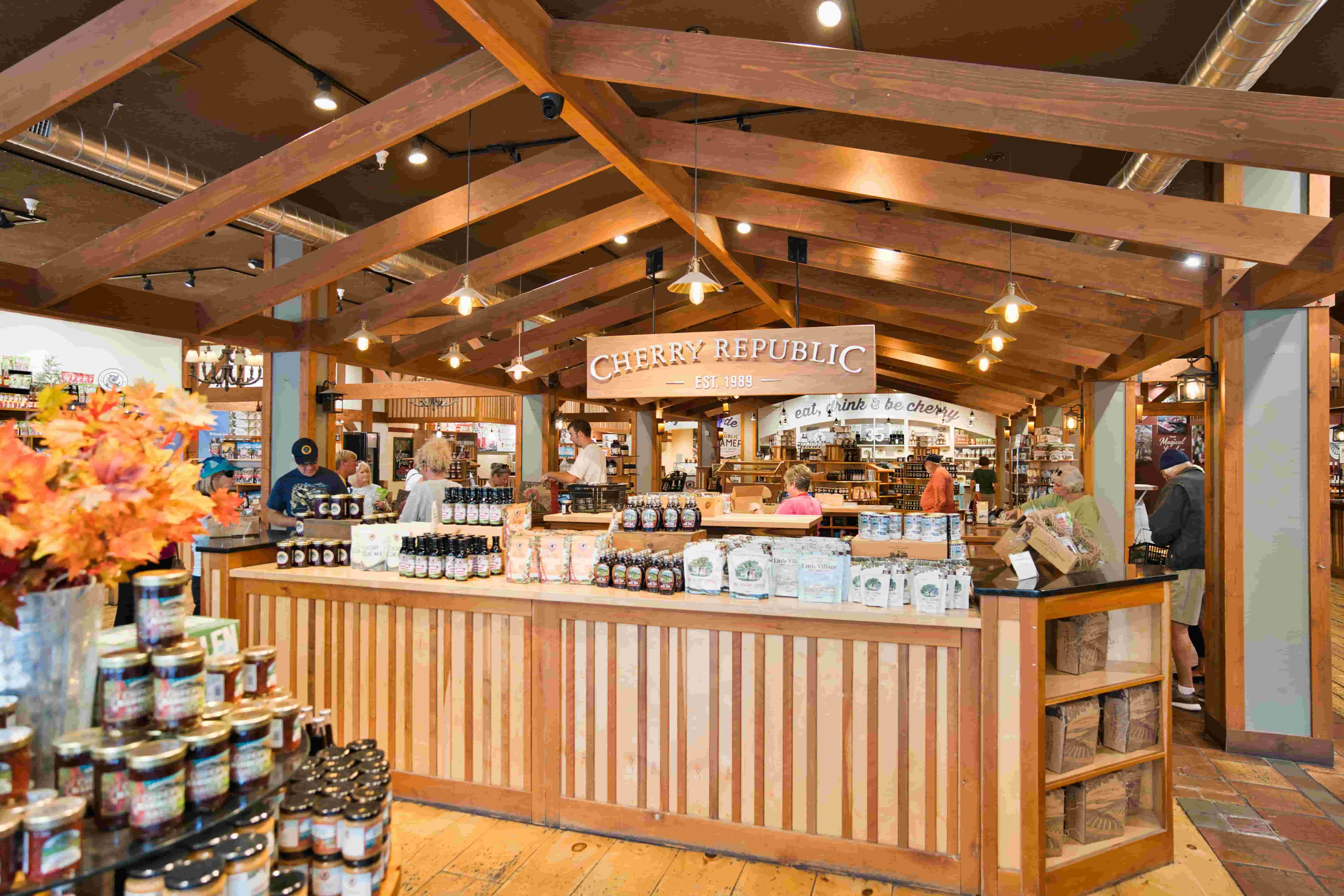
A shoplifting incident, a customer who slips on a wet floor near the entrance, or a grease fire in the stockroom can wipe out a year of profit in one afternoon. Retail is a foot-traffic business, which means it carries foot-traffic risk: more strangers walking through your door than almost any other type of small business. Insurance for a retail store exists to absorb the cost of that risk so one bad incident does not become the reason the store closes.
Most retail owners searching for business insurance for a retail store are not looking for a lecture on risk theory. They want to know what a policy actually covers, what retail insurance costs in 2026, and whether they are already carrying gaps they do not know about. This guide answers all three, using real published cost data instead of guesswork, and explains where Pennsylvania rules add wrinkles most national guides skip.
Key Takeaways
Want your exact rate today? Call 717-229-5115 or use the quote form below. Most quotes ready in one business day.
Retail store insurance is not one single policy. It is a set of coverages built around the specific risks a store faces: customers on the premises, inventory that can be stolen or damaged, employees handling cash and merchandise, and a physical location that generates income only while it stays open. For most stores, the practical starting point is a Business Owner's Policy (BOP), which combines general liability, commercial property, and business income coverage into one package.
Whether you search for retail store insurance, business insurance for a retail store, or simply a retail insurance policy, the underlying need is the same: protect the building and inventory, protect against customer injury claims, and protect the income the store generates. A general merchandise shop, a boutique, a hardware store, and a specialty food shop all fall into roughly the same insurance category, though pricing shifts with the specific risk profile of each.
Dragon Insurance places retail BOPs and stand-alone commercial policies through carriers built for small business risk, including biBerk, Hiscox, CNA, Coterie, Thimble, Three, and Simply Business, across Pennsylvania, Texas, Virginia, Maryland, Ohio, Tennessee, and Kentucky.
A standard retail BOP is built from three coverages, each responding to a different kind of loss:
General liability
Pays defense costs and settlements when a customer is injured on your premises (a slip-and-fall near the entrance, a shelving unit that tips over) or when your product causes property damage to someone else. Standard limits run $1,000,000 per occurrence and $2,000,000 aggregate, which satisfies most commercial lease requirements.
Commercial property
Covers your building (if you own it), fixtures, signage, and inventory against fire, storm damage, vandalism, and theft. Inventory value is the single biggest driver of this piece for a retail operation, since a full backroom of stock can represent more insured value than the building itself.
Business income (business interruption)
Replaces lost income and pays fixed expenses (rent, payroll, loan payments) if a covered loss, like a fire, forces the store to close temporarily while it rebuilds or restocks.
Employee dishonesty (theft add-on)
Covers theft or fraud committed by your own employees. It is usually added as an endorsement to a BOP or commercial property policy rather than sold on its own, with common limits between $10,000 and $50,000. According to Insureon, a $25,000 limit rider typically adds a modest amount to an annual premium, well under $1,000 a year in most cases. Call 717-229-5115 for an exact add-on cost.
Workers compensation
Required in Pennsylvania and most states once a retail store has employees. Covers medical costs and lost wages for staff injured on the job, from a fall in the stockroom to a repetitive strain injury from stocking shelves. Not included in a BOP; it is always a separate policy.
A standard BOP does not include workers compensation, commercial auto for delivery vehicles, cyber liability, flood, or a full commercial crime policy. Each of those requires a separate policy or endorsement layered on top of the base BOP.
How much should business insurance cost for a retail shop? The honest answer is that it varies by inventory value, square footage, location, employee count, and claims history, but published industry data gives a solid starting range. According to Insureon, small businesses average $83 a month for a BOP, with annual premiums ranging roughly from $400 to $6,000 or more depending on risk. MoneyGeek reports that retail-specific BOPs average about $98 a month, or $1,174 a year, noting retail as one of the more affordable business types to insure compared to restaurants or contractors.
| Cost benchmark | Figure |
|---|---|
| Small business BOP average (all industries) | $83/month, per Insureon |
| Retail-specific BOP average | $98/month ($1,174/year), per MoneyGeek |
| Annual BOP premium range | $400 to $6,000+/year, per Insureon |
| Employee dishonesty rider ($25,000 limit) | Under $1,000/year in most cases, per Insureon |
Figures above come from Insureon and MoneyGeek published cost data and are general market benchmarks, not a Dragon Insurance quote. Your actual rate depends on your specific store, inventory, and location.
Five factors move a retail insurance cost estimate the most: inventory value (the total insured cost of the merchandise on your shelves and in the back room), square footage and building age, foot traffic volume, employee count (which drives workers comp premium separately), and claims history. A boutique with $50,000 in inventory in a small strip mall will price very differently than a hardware store carrying $500,000 in stock in a stand-alone building. Insurance cost for a business is rarely one-size-fits-all, which is exactly why an independent agent comparing multiple carriers matters.
Get your real number
Published averages are a starting point, not your quote.
Dragon compares biBerk, Hiscox, CNA, Coterie, Thimble, Three, and Simply Business to find the right fit for your inventory and location.
A BOP exists because carriers can price general liability, commercial property, and business income together at a discount compared to writing three individual policies. Industry sources consistently describe the same structure: a BOP bundles the coverages a low-risk small business (retail, restaurants, offices) needs most into one policy with one renewal date, instead of three separate applications, three separate underwriting files, and three separate bills.
Buying general liability and commercial property as stand-alone policies still makes sense for stores that fall outside standard BOP eligibility, typically businesses with very high inventory values, unusual risk classes, or revenue above the BOP threshold most carriers set. For a typical small retail shop, though, the packaged BOP is the more cost-efficient path, and it is what most retail insurance business owners end up purchasing once they compare both routes.
The tradeoff is flexibility. A stand-alone general liability policy lets you set liability limits independent of your commercial property coverage, which can matter if your store carries very high-value inventory but operates out of a modest leased space. An independent agent can run both structures side by side and show you the actual dollar difference for your specific store.
Retail stores face three risk categories more often than most other small businesses: theft, customer injury, and, for stores that sell beer or wine, liquor liability.
Theft: shoplifting, break-ins, and employee theft
Commercial property coverage inside a BOP responds to burglary and break-in losses to your building and inventory. Theft committed by your own employees is a different exposure and usually requires the employee dishonesty endorsement described above. Broader commercial crime insurance, which also covers theft and fraud by non-employees such as computer fraud or forged checks, is commonly written as its own separate policy layered on top of the BOP rather than folded into it.
Slip-and-fall and other customer injury claims
Wet floors near an entrance, uneven flooring, cluttered aisles, and unsecured shelving are the most common sources of customer injury claims in retail. General liability inside the BOP covers the medical costs, legal defense, and settlement if a customer is hurt on your premises. Keeping incident reports and photos from the moment an injury occurs strengthens your claim position significantly.
Liquor liability for Pennsylvania retail stores selling beer or wine
Does a retail liquor store require insurance in Pennsylvania? The Pennsylvania Liquor Control Board requires licensees to demonstrate "adequate insurance coverage appropriate to the scope of operations" as part of licensing, though it does not publish one specific statewide dollar minimum that applies to every retail alcohol license. Separately, Pennsylvania's dram shop law (47 P.S. Section 4-493) holds licensees liable for serving a visibly intoxicated person or a minor who then causes harm, which creates real practical exposure even without one blanket state-mandated number. In practice, landlords, lenders, and distributors commonly require proof of liquor liability coverage, frequently $1,000,000 per occurrence and $2,000,000 aggregate, as a condition of a lease or loan, independent of what the PLCB requires at licensing. If your store sells beer or wine, ask your agent whether liquor liability needs to be added to your BOP or purchased as a separate policy.
Commercial umbrella insurance sits above your underlying general liability (and commercial auto, if you have delivery vehicles) policy. It does not activate until those underlying limits are fully exhausted, at which point it adds extra liability protection, typically in $1,000,000 increments, up to a much higher aggregate limit. You cannot buy umbrella coverage without an existing GL policy in place underneath it.
A common example: a retail customer wins a $1,500,000 slip-and-fall judgment against a store that only carries $1,000,000 in general liability coverage. Without an umbrella policy, the store is personally responsible for the remaining $500,000. With a $1,000,000 umbrella layered on top, the umbrella picks up that gap. For a growing store, a landlord lease requirement above $1,000,000, or a store located in a high foot-traffic shopping center, umbrella coverage is inexpensive protection against a catastrophic single claim. Call 717-229-5115 for umbrella pricing specific to your store's GL limits.
As an independent agency, Dragon Insurance is not tied to one carrier's retail appetite or pricing. We compare quotes across our panel and build the coverage stack around your actual inventory, square footage, and claims history.
Do retail stores have insurance for theft?
Yes. Commercial property coverage inside a standard BOP covers burglary, break-ins, and vandalism to your store and inventory. Theft by your own employees is a separate exposure, usually covered by an employee dishonesty endorsement added to the BOP. Broader commercial crime insurance, which also covers non-employee theft and fraud such as computer fraud, is typically a separate policy layered on top rather than part of the base BOP.
How much is insurance for a retail store?
According to Insureon, small businesses average $83 a month for a BOP, with annual premiums ranging from about $400 to $6,000 or more depending on risk. MoneyGeek reports retail-specific BOPs average about $98 a month ($1,174 a year), generally on the more affordable end compared to restaurants or contractors. Your exact rate depends on inventory value, square footage, location, and claims history. Call 717-229-5115 for a quote based on your store.
What does business liability insurance cover for retail stores?
General liability, the liability piece of a retail BOP, covers customer bodily injury claims (a slip-and-fall near your entrance, a shelving unit that falls on someone), property damage your business causes to others, and personal or advertising injury claims. It also pays your legal defense costs. Standard limits run $1,000,000 per occurrence and $2,000,000 aggregate, which satisfies most commercial lease requirements.
What is commercial umbrella insurance for retail stores?
Commercial umbrella insurance adds extra liability limits on top of your existing general liability (and commercial auto) policy, activating only after those underlying limits are exhausted. It is typically sold in $1,000,000 increments and requires an existing GL policy underneath it. A retail example: a $1,500,000 slip-and-fall judgment against a store with only $1,000,000 in GL coverage leaves the umbrella policy to cover the remaining $500,000.
Does a retail liquor store require insurance in Pennsylvania?
Pennsylvania does not publish one blanket statewide liquor liability dollar minimum for every retail alcohol license. However, the Pennsylvania Liquor Control Board requires licensees to carry "adequate insurance coverage appropriate to the scope of operations" as part of licensing, and Pennsylvania's dram shop law (47 P.S. Section 4-493) holds licensees liable for serving a visibly intoxicated person or a minor who then causes harm. In practice, landlords, lenders, and distributors frequently require proof of liquor liability coverage, often $1,000,000 per occurrence and $2,000,000 aggregate, as a condition of a lease or loan.
How much should business insurance cost for a small retail business overall?
A BOP is usually the largest single line item, and per Insureon and MoneyGeek that typically runs $83 to $98 a month for small retail businesses. On top of that, most stores with employees also need workers compensation, priced separately based on payroll, and stores with delivery vehicles need commercial auto. There is no single "business insurance cost" number that fits every retail store; a full coverage quote accounting for your specific payroll and vehicle needs gives the real total.
Is a BOP the same thing as retail insurance?
For most stores, yes, in practice. "Retail insurance" is the general category, and the BOP is the specific policy structure most retail stores use to satisfy it. A BOP bundles general liability, commercial property, and business income coverage. Workers compensation, commercial auto, cyber liability, and commercial umbrella are not part of a BOP and are purchased separately when needed.
Does retail store insurance cover slip-and-fall accidents?
Yes. General liability, included in a standard BOP, covers customer slip-and-fall injuries on your premises, including medical costs, legal defense, and any settlement or judgment up to your policy limit. Keeping detailed incident reports, photos of the area, and witness information at the time of the injury helps support the claim.
Do I need workers compensation for part-time retail employees?
In Pennsylvania, most employers with one or more employees, full-time or part-time, are required to carry workers compensation insurance. It is not part of a BOP and must be purchased as a separate policy, priced based on your total payroll and job classifications.
How fast can I get a retail store insurance quote from Dragon?
Most retail BOP quotes are ready within one business day. Have your store address, square footage, inventory value, and employee count on hand when you call 717-229-5115 or submit the online quote form, and an agent will compare carriers on our panel for your store.
Talk to a licensed agent now
We compare biBerk, Hiscox, CNA, Coterie, Thimble, Three, and Simply Business side by side so you are not stuck with one carrier's retail pricing.
Last updated: July 2026. Dragon Insurance Services is a licensed independent insurance agency. Coverage availability, eligibility, terms, limits, and rates vary by carrier, location, and individual business circumstances. Cost ranges shown are general market estimates based on Insureon and MoneyGeek data and do not constitute a quote or guarantee of pricing. Contact us for a personalized quote based on your specific store.
Explore Related Coverage
Ready to compare carriers and get a quote?
Dragon Insurance is an independent agency in Camp Hill, PA. We shop 30+ carriers to find your best rate.
Prefer to talk it through?
Get a real quote from a licensed advisor. English, Nepali, and Hindi spoken.
About the Author
Bimal GurungCEO, Agency Principal & Licensed Insurance Agent
Bimal Gurung is CEO and Agency Principal of Dragon Insurance Services, an independent agency in Camp Hill, PA that compares 30+ carriers for clients across Pennsylvania, Texas, Virginia, Maryland, Ohio, Tennessee, and Kentucky.
Meet the Dragon Insurance teamContinue Reading
Business
Restaurant Insurance: Your BOP Does Not Cover Liquor
12 min read
Business
PA Convenience Store Insurance - for Store Owners
11 min read
Business
General Liability Insurance for Small Business Owners
11 min read
Business
Business Insurance Basics for Small Businesses | Dragon
6 min read

Business
Sole Proprietor Business Insurance Guide 2026 | Dragon
10 min read
Business
HVAC Contractor Insurance: Cost & PA Requirements | Dragon
9 min read